Madeira - a quiet mountain ridge
Introduction
There are days on Madeira that announce themselves with drama – sunrise over Pico do Arieiro, fog drifting through Fanal Forest, or the Atlantic throwing itself at the cliffs with theatrical enthusiasm. I had witnessed them all. But it was my final day before departing back to Blighty and I resolved to make it quieter, slower, and shaped by the simple desire to explore somewhere new before the trip came to an end.
I had done almost no research. My method was the usual blend of optimism and guesswork: open Google Maps, zoom in on anything that looks mountainous, and hope it isn’t overrun with people taking photos of themselves pretending not to pose. My pin landed on Lombo do Mouro, a ridge above the valleys of São Vicente, which had been my base for the last nine days. It looked promising - dramatic terrain, accessible roads, and, crucially, not one of the island’s famous honeypots, but with a slight catch. On closer inspection at one of the photos from Google - a comment stood out “Instgram favourite”. I hesitated for a minute, pondered; then put my phone away and grabbed my camera bag.
The drive up, not down
The drive up from São Vicente was typical Madeira: steep, winding, and scenic enough to make you forget that your car is working harder than it ever expected when it left the factory. At least this time the engine behaved. Earlier in the trip, on the ascent to Pico do Arieiro, it had staged a brief protest halfway up the mountain.
To be precise, I took a wrong turn due to delayed satnav instructions and found myself driving along an exceptionaly narrow moutain road, through a very remote village, and gazed upon by bewildered villagers.
At the end, there was T junction and a sharp right turn after which I was presented with an immediate and extreme ascent. I knew it was bad, I was not looking forward, I was looking up; and the road distinguished itself from others with a concrete surface covered in a lattice-like tread. This felt like a climb of at least 20 degrees, which I subsequently learnt is relatively normal in the moutainous areas.
I put my foot down.
As much as the car and my right foot tried, handicapped by a standing start, the car ominously ground to a halt about 15 metres up. My heart also knew it was bad, because it was trying to escape out of my chest. You see, the roll back would not have been 15 metres down - that would have been the mere length of the runway before the car paraglided several hundred metres into the moutain air. I’m not sure I ever fully recovered from that moment, even if the car eventually did.
Insta-zombie alert
Lombo do Mouro has a reputation as an Instagram favourite, which gave me pause. I wasn’t in the mood for dodging tripods or waiting for people to finish their slow motion hair flicking routines. Fortunately, when I arrived, the ridge was quiet. Just me, the mountains, and the kind of silence that feels like a reward.
I should acknowledge something here. In the footage from this day (video on YouTube), I am noticeably heavier than I am now. This was before I began the long process of losing weight, and although I was hiking peaks and carrying camera gear, I didn’t look like the sort of person who does either of those things. It’s not a confession so much as a footnote – a reminder that we all have chapters in our lives that we’d prefer to rewrite, even when surrounded by beautiful scenery.
(Incidentally, I wrote a short article on my road to fitness which you can read here.)
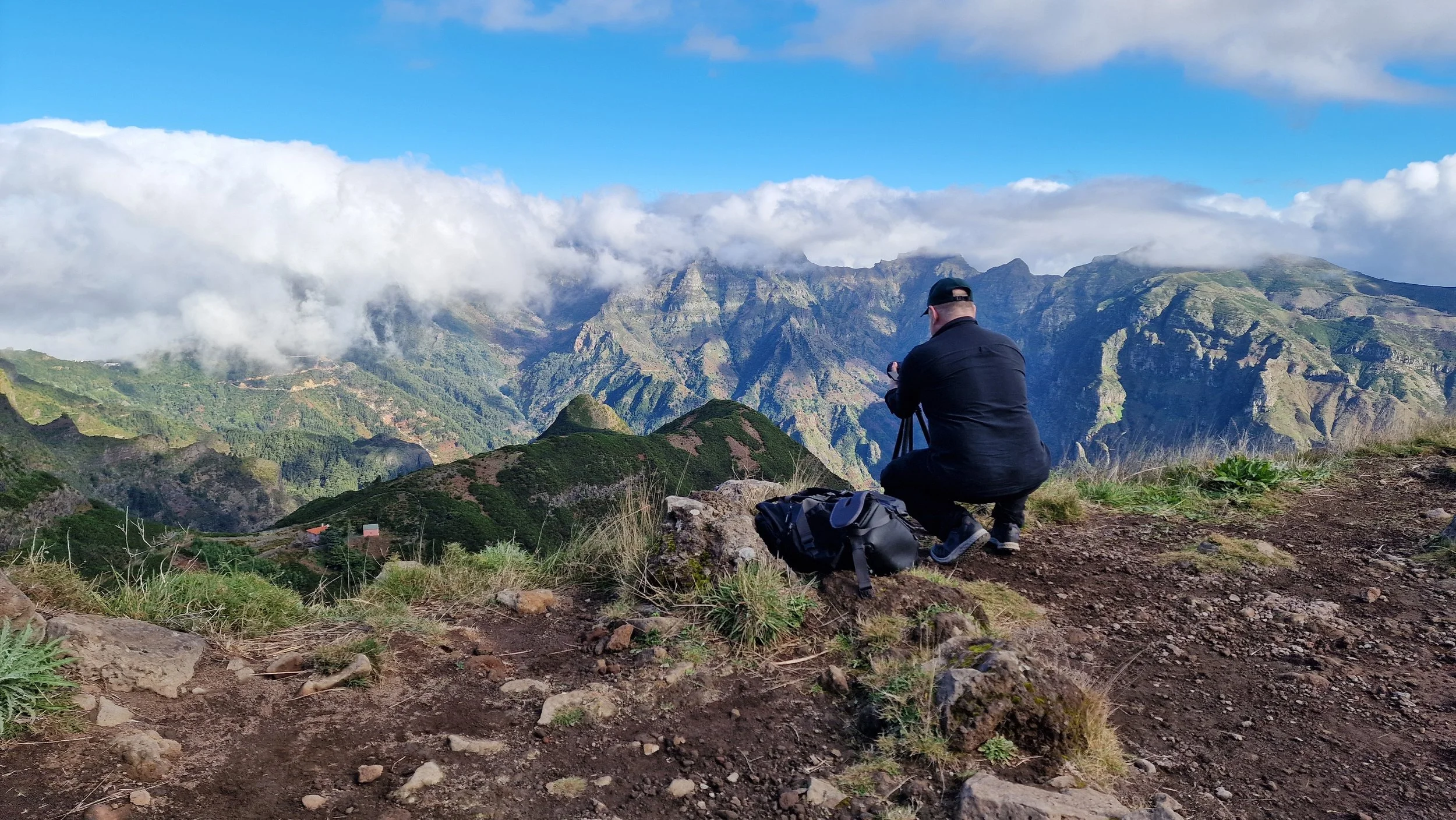
Me setting up
A nice couple approached, and after I took a few photos of them with their camera, they insist on taking one of me. And here it is.
History and landscape
Lombo do Mouro sits above the Ribeira da Vargem basin, part of the wider São Vicente region – one of the earliest settled areas on Madeira. When the island was colonised in the 15th century, the interior valleys became essential for agriculture. The steep slopes you see from the ridge were carved into terraces by generations of farmers who refused to be defeated by the landscape. Madeira offered almost no flat land, so the people simply made their own.
Sugar cane dominated the early centuries, turning Madeira into a wealthy Atlantic outpost. Later came vines, and with them the island’s famous fortified wine, which travelled the world long before mass tourism ever reached Madeira. Between the terraces grew sweet potatoes, maize, vegetables, and chestnut trees – the quiet staples of rural life.
São Vicente itself developed a reputation for resilience. Its people lived between mountains and sea, shaped by isolation, agriculture, and the constant negotiation with gravity that defines life on Madeira. Small hamlets like Vargem, Feiteiras, and Lombo do Mouro were never the sites of grand historical events, but they were - and still are - places where the island’s identity was built one terrace at a time.
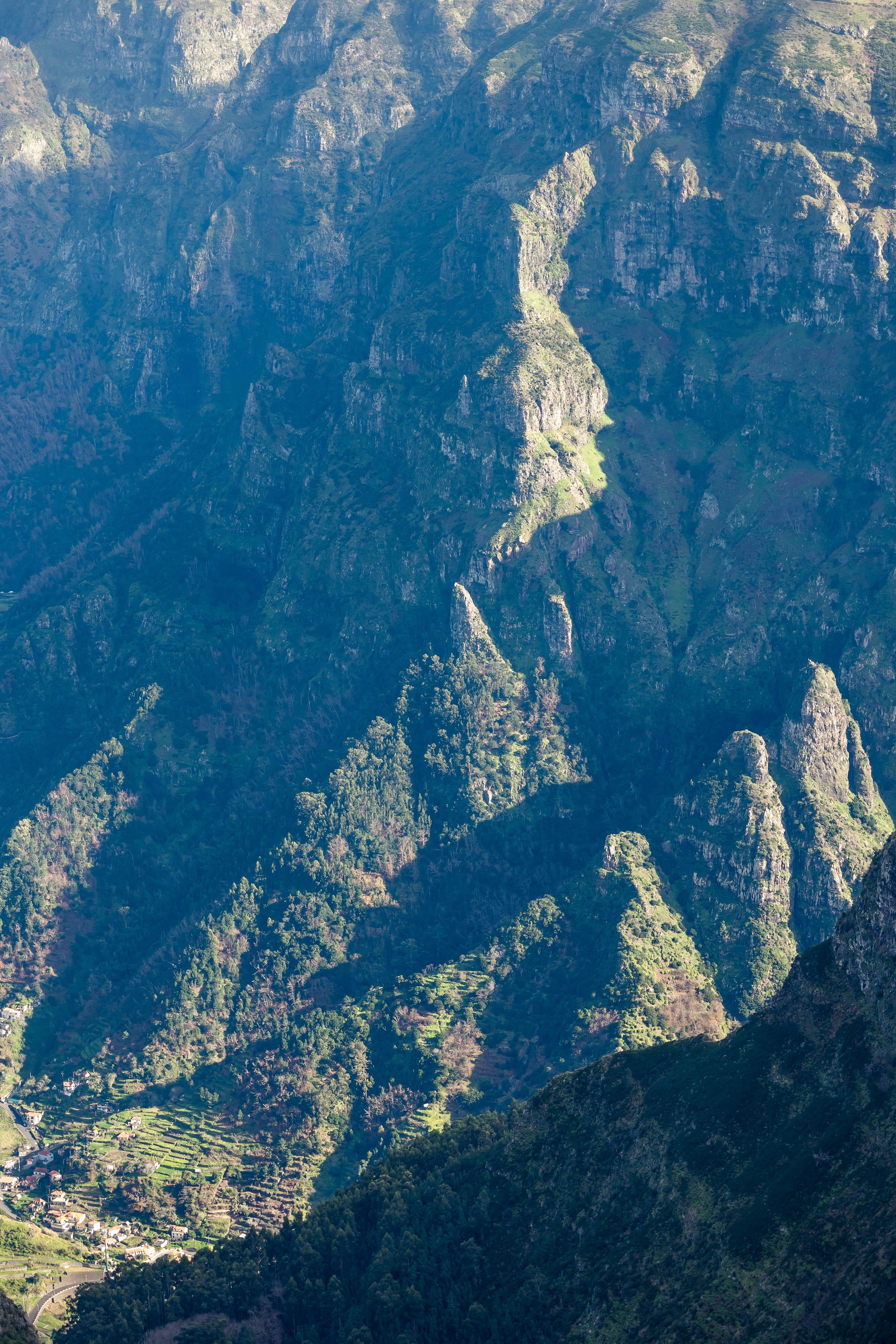
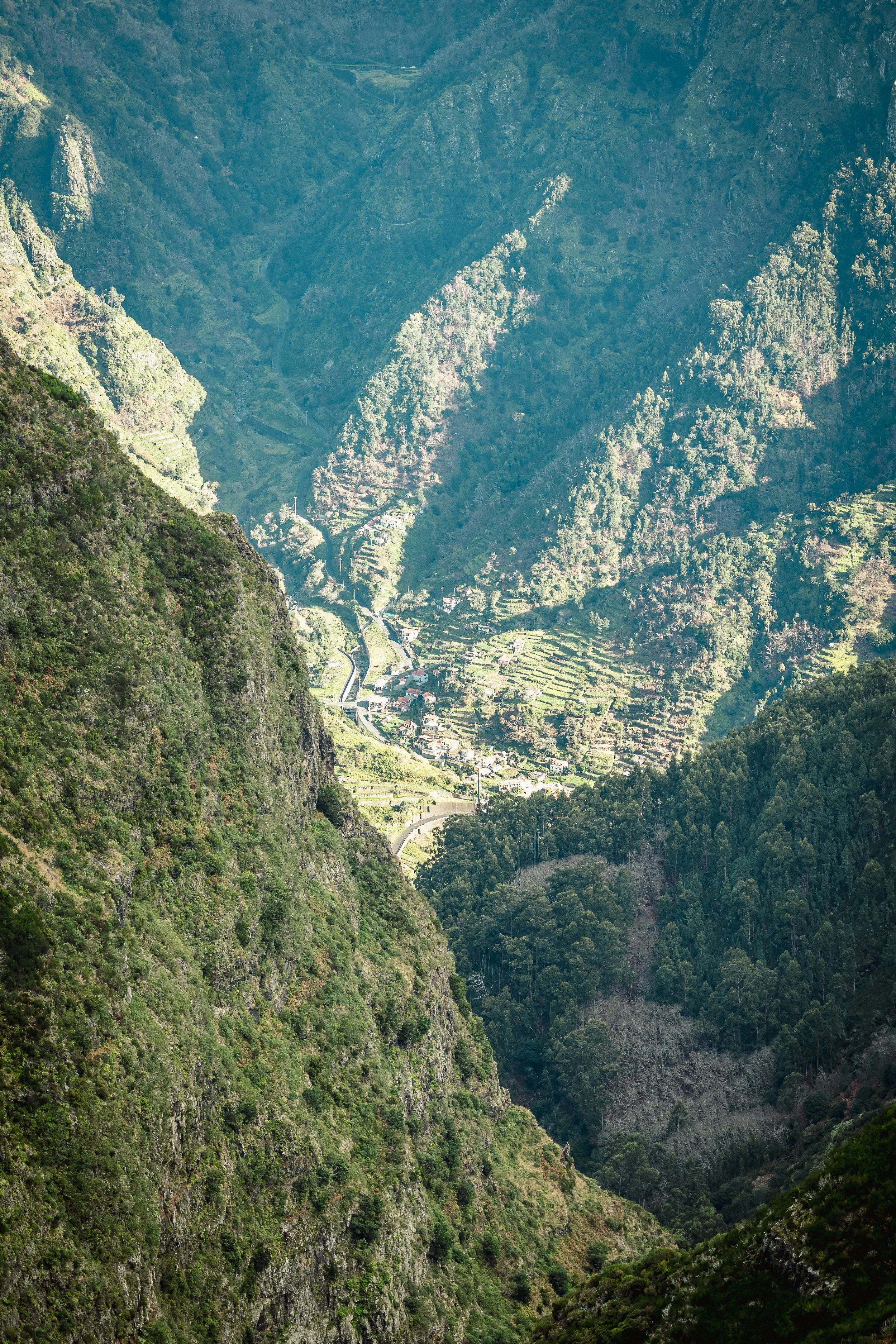
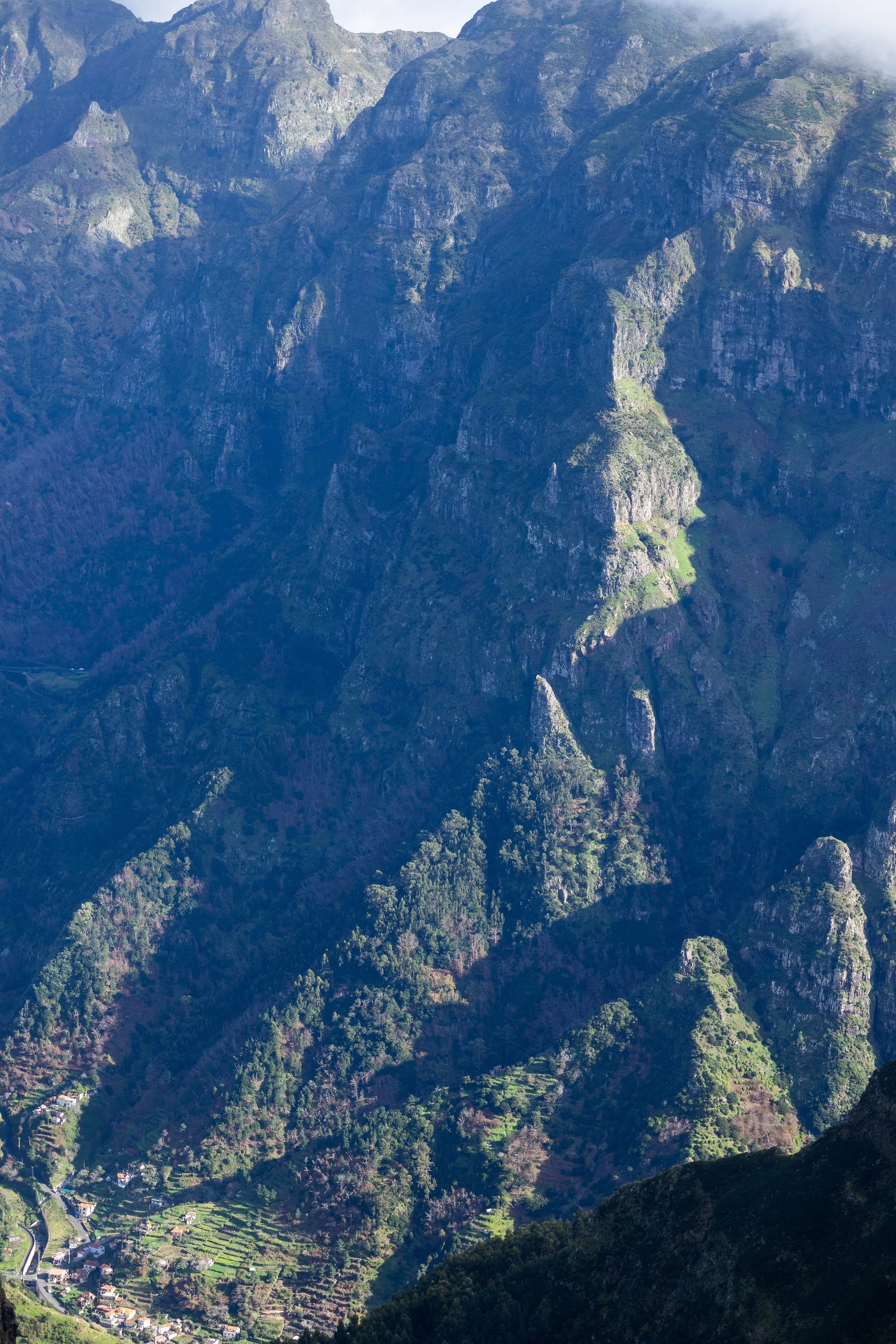
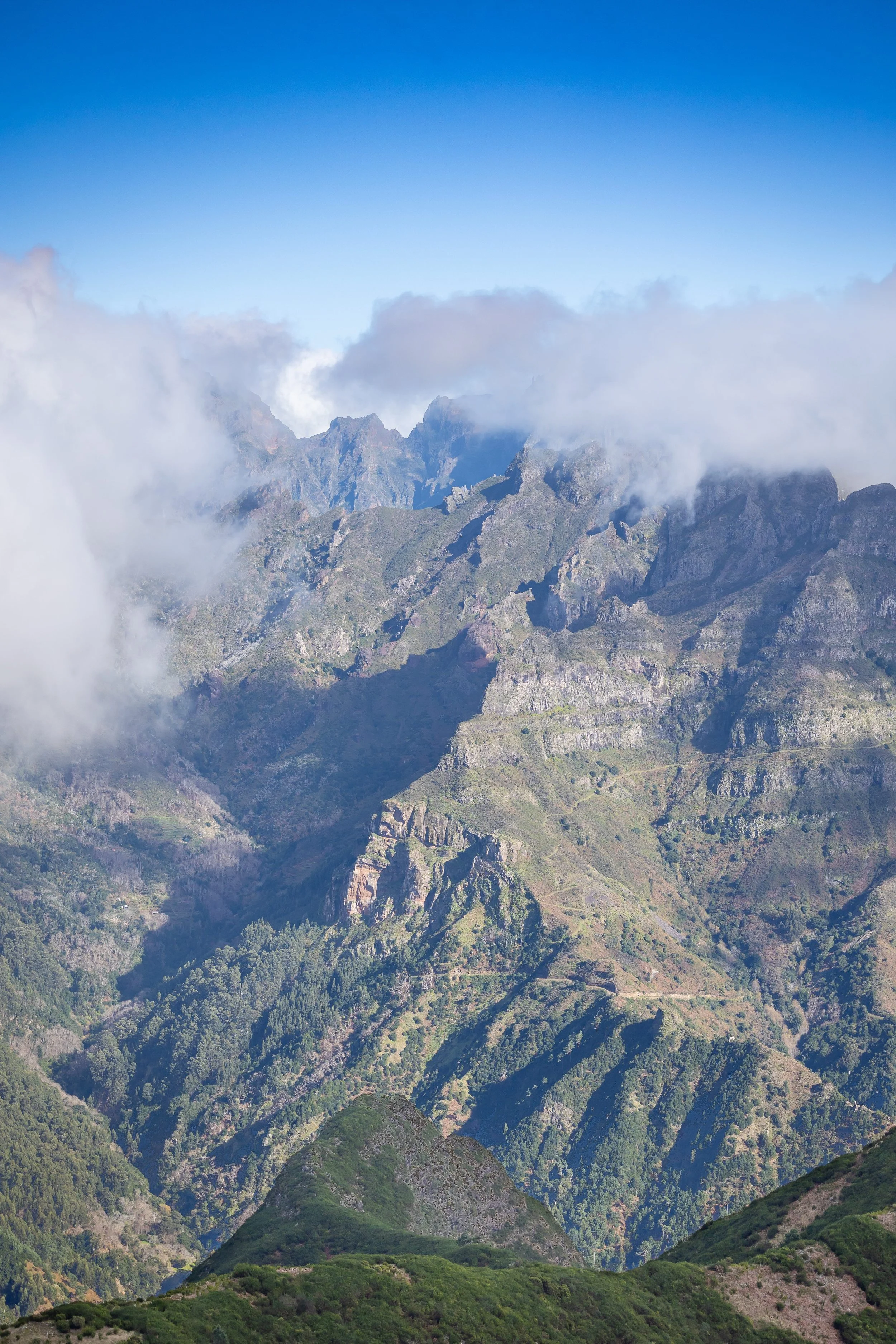
Mountain ridges
Photographing the ridge
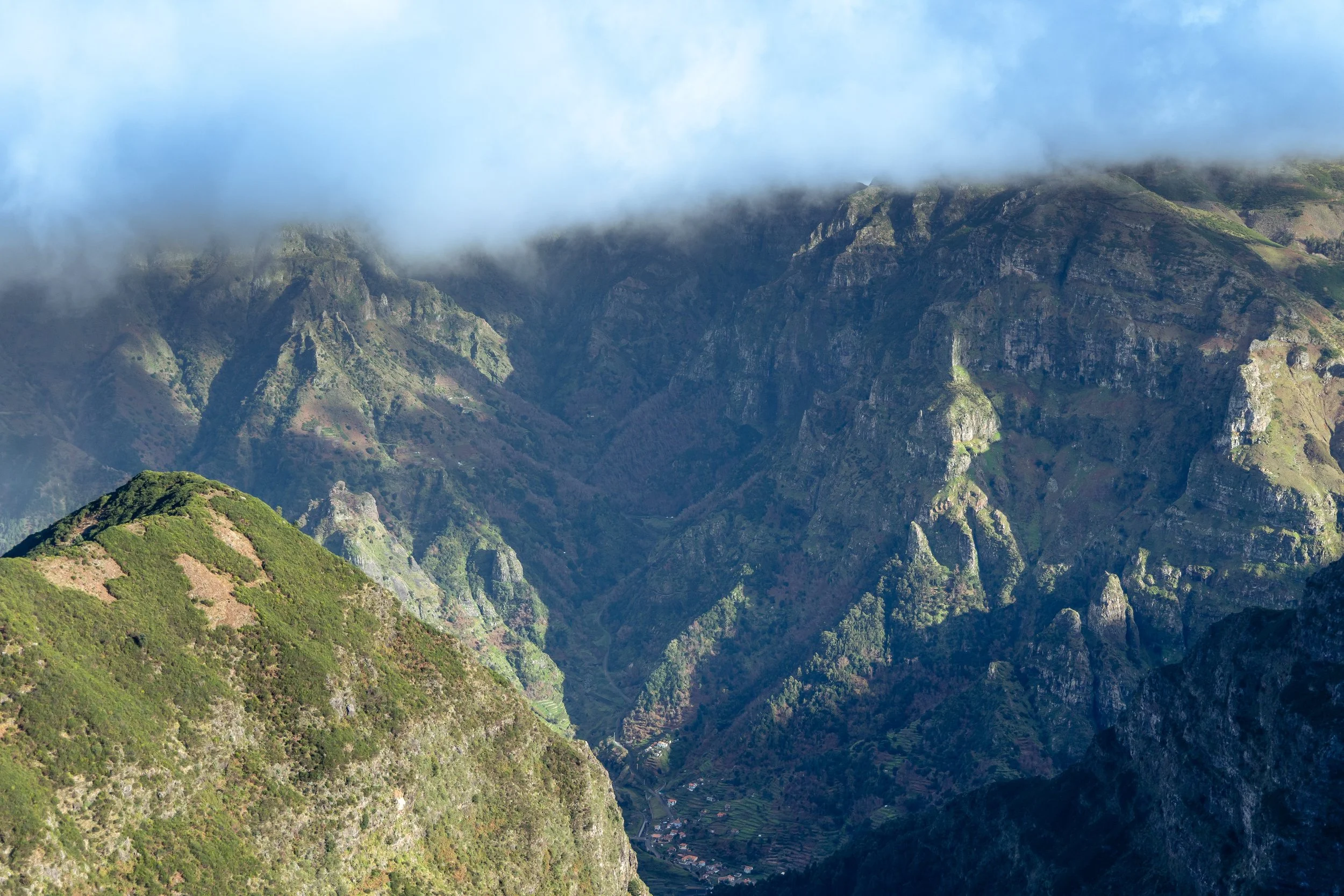
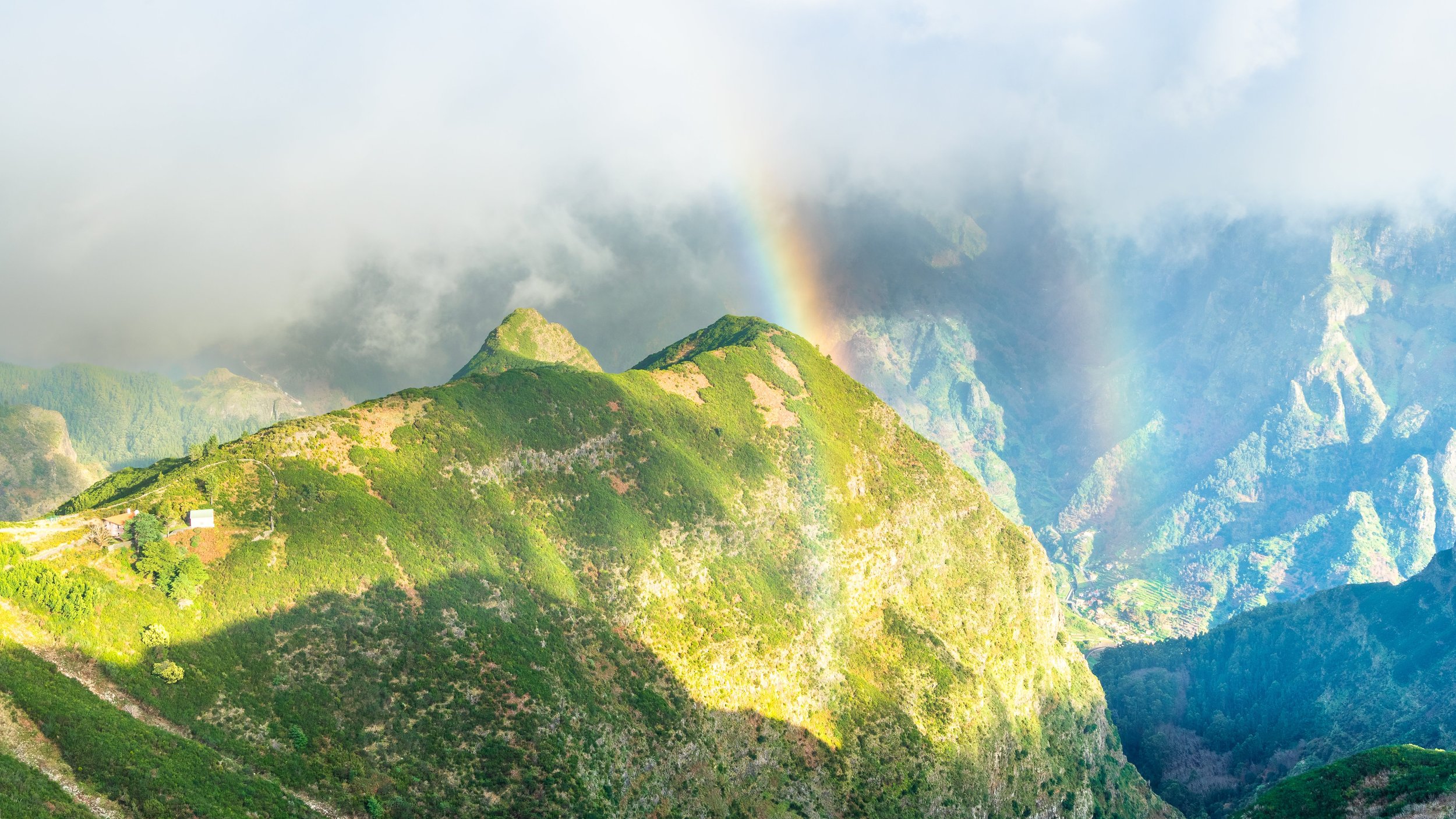
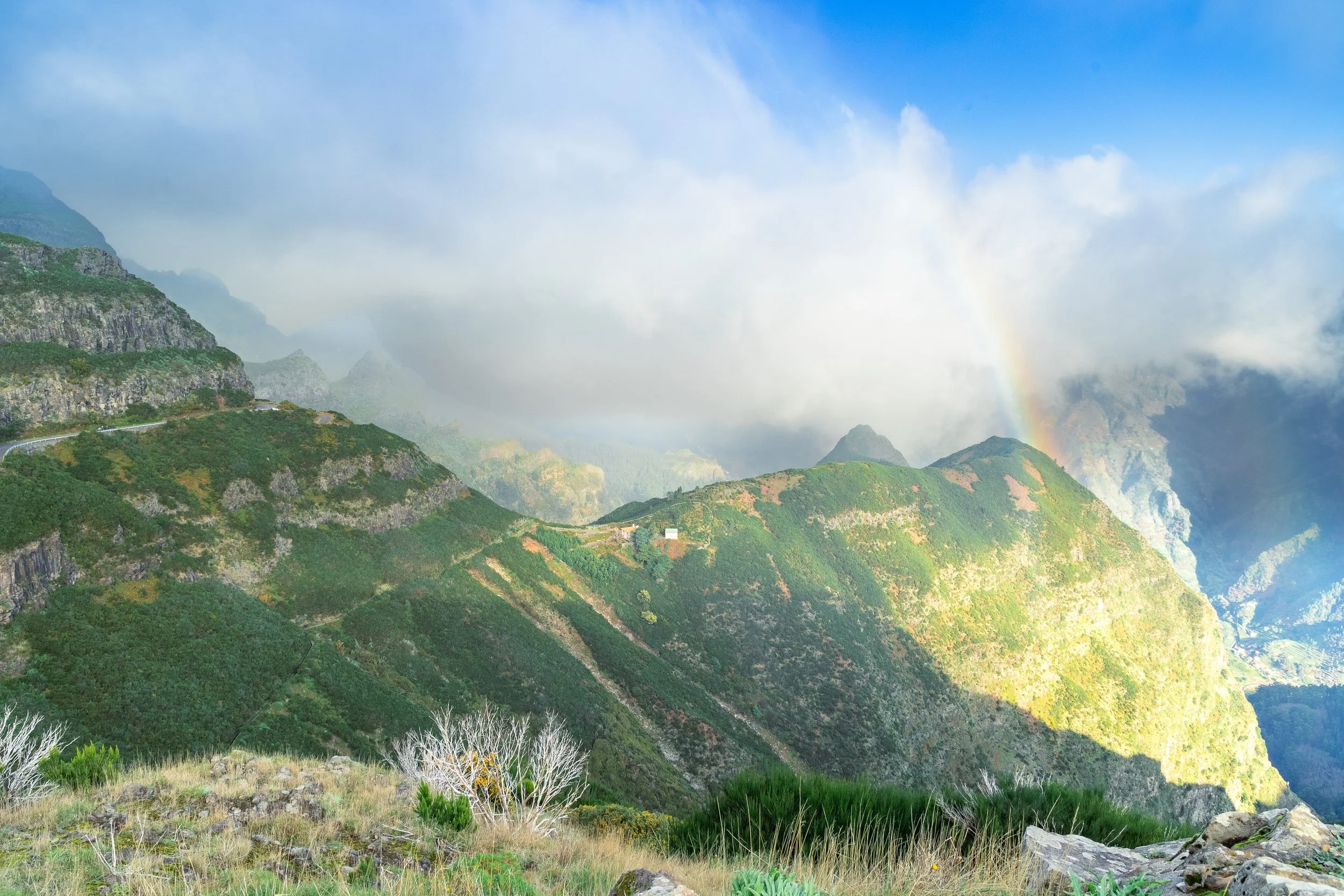
From the ridge, the view is a study in contrasts: sunlit valleys, distant peaks softened by cloud, and the quiet geometry of terraced slopes. I spent the first part of the afternoon photographing the mountains with a telephoto lens, picking out ridges and villages tucked into the basin below. Interestingly, if you are into phtography, whilst I had a 100-400mm lens, I rarely zoomed in more than 120mm (in full frame).
Then I switched lenses to the 24-105m F4, and set up a timelapse, watching the clouds drift across the horizon toward the south coast. It was my first ever timelapse and features in my behind the scenes video.
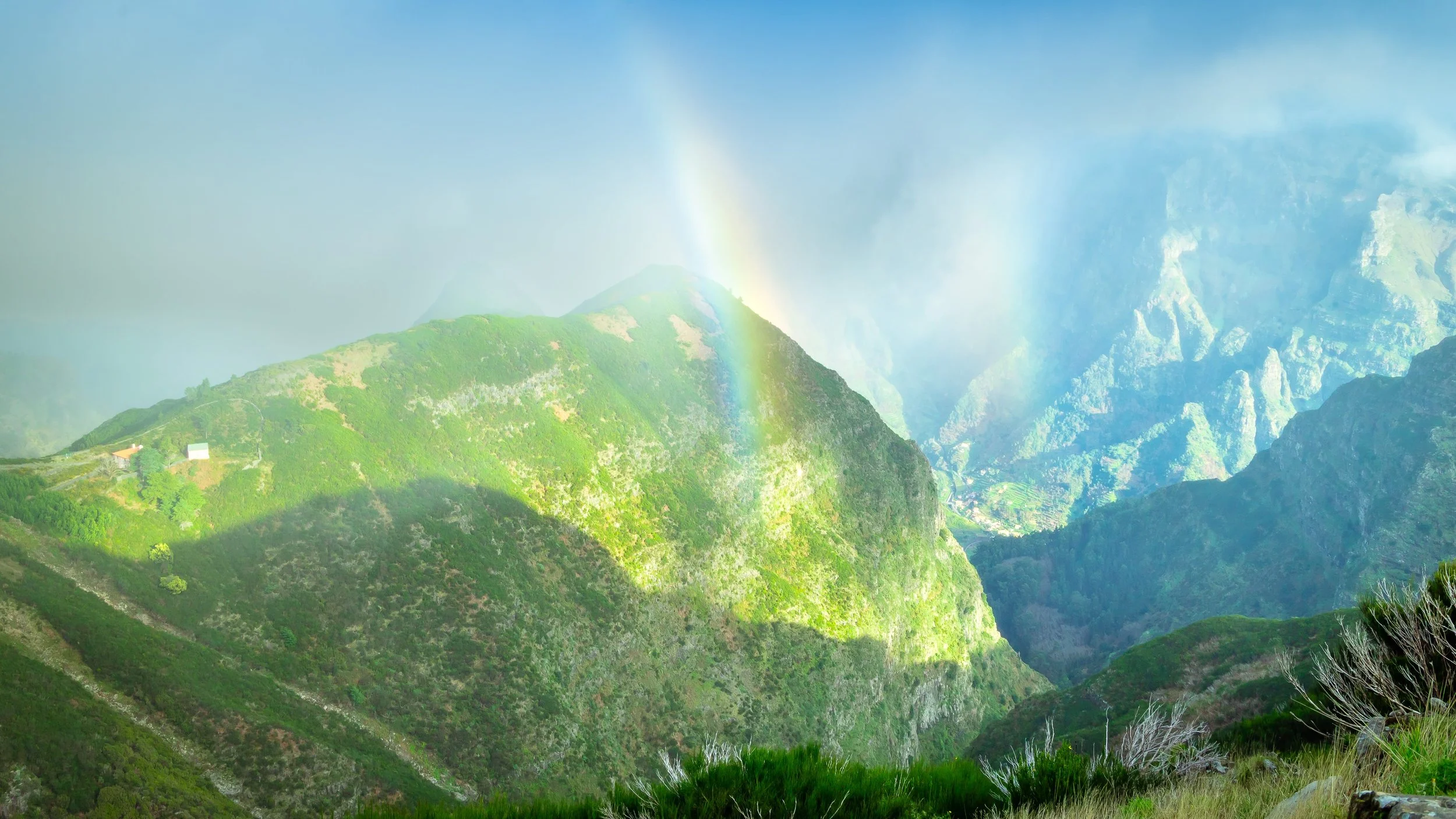
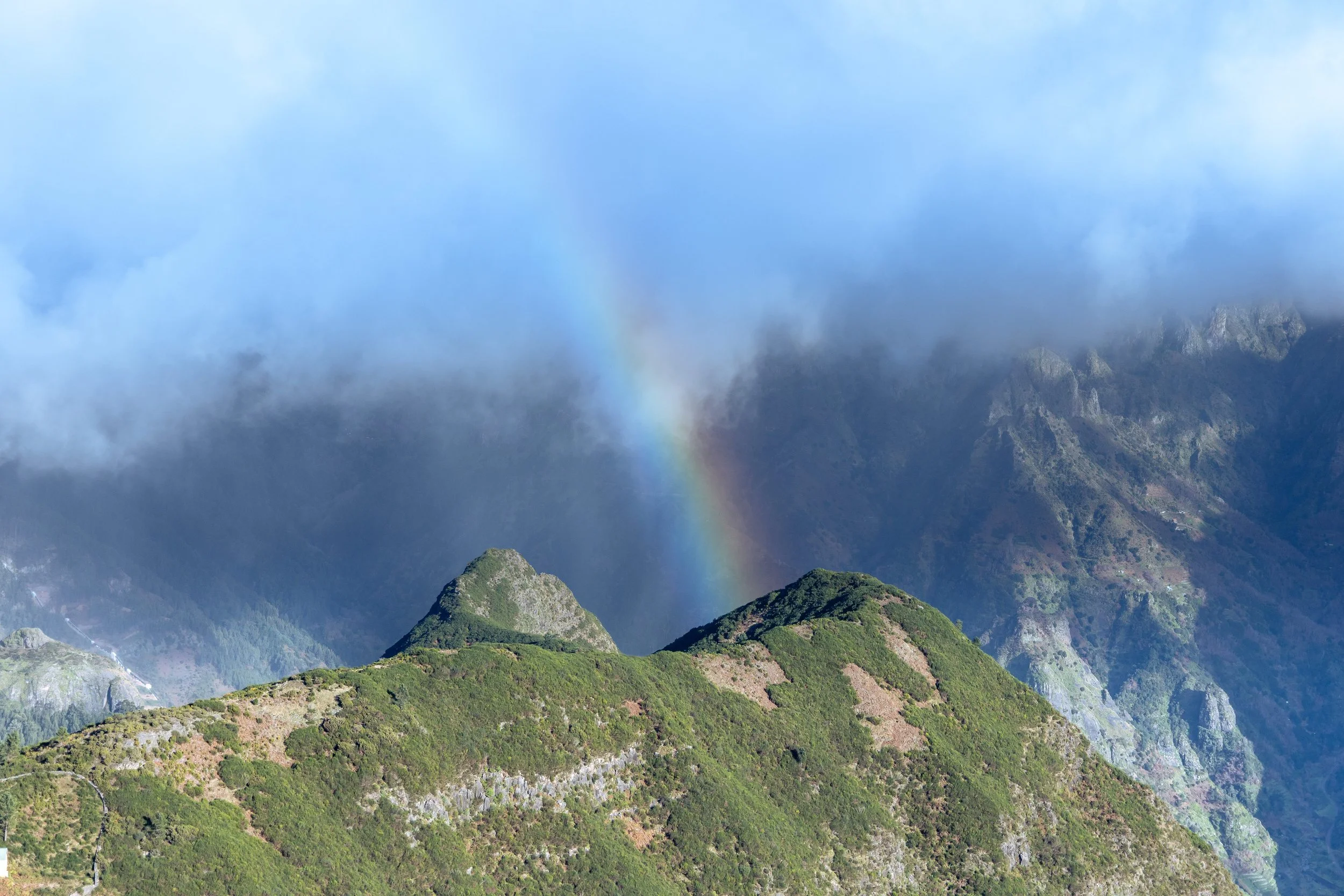
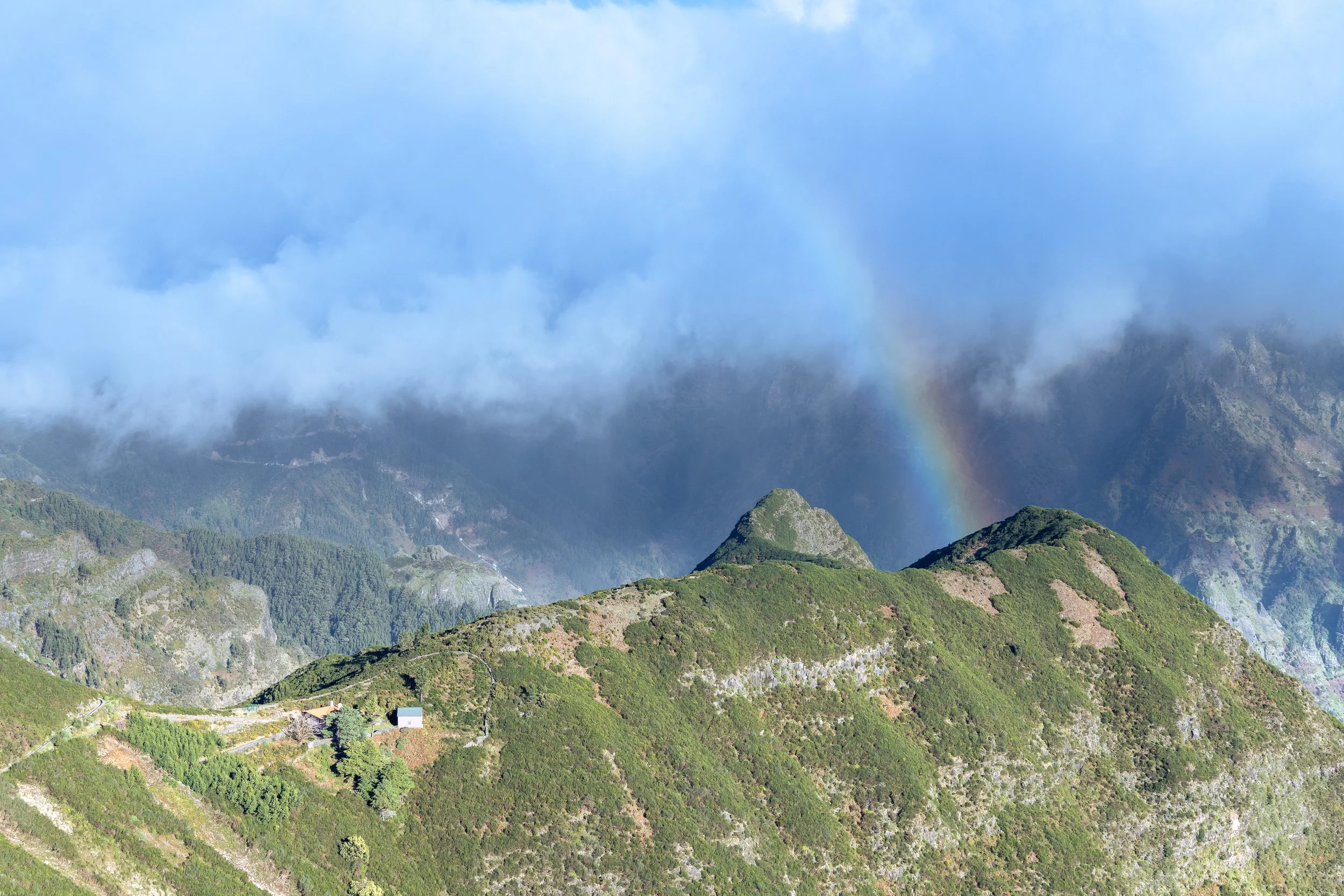
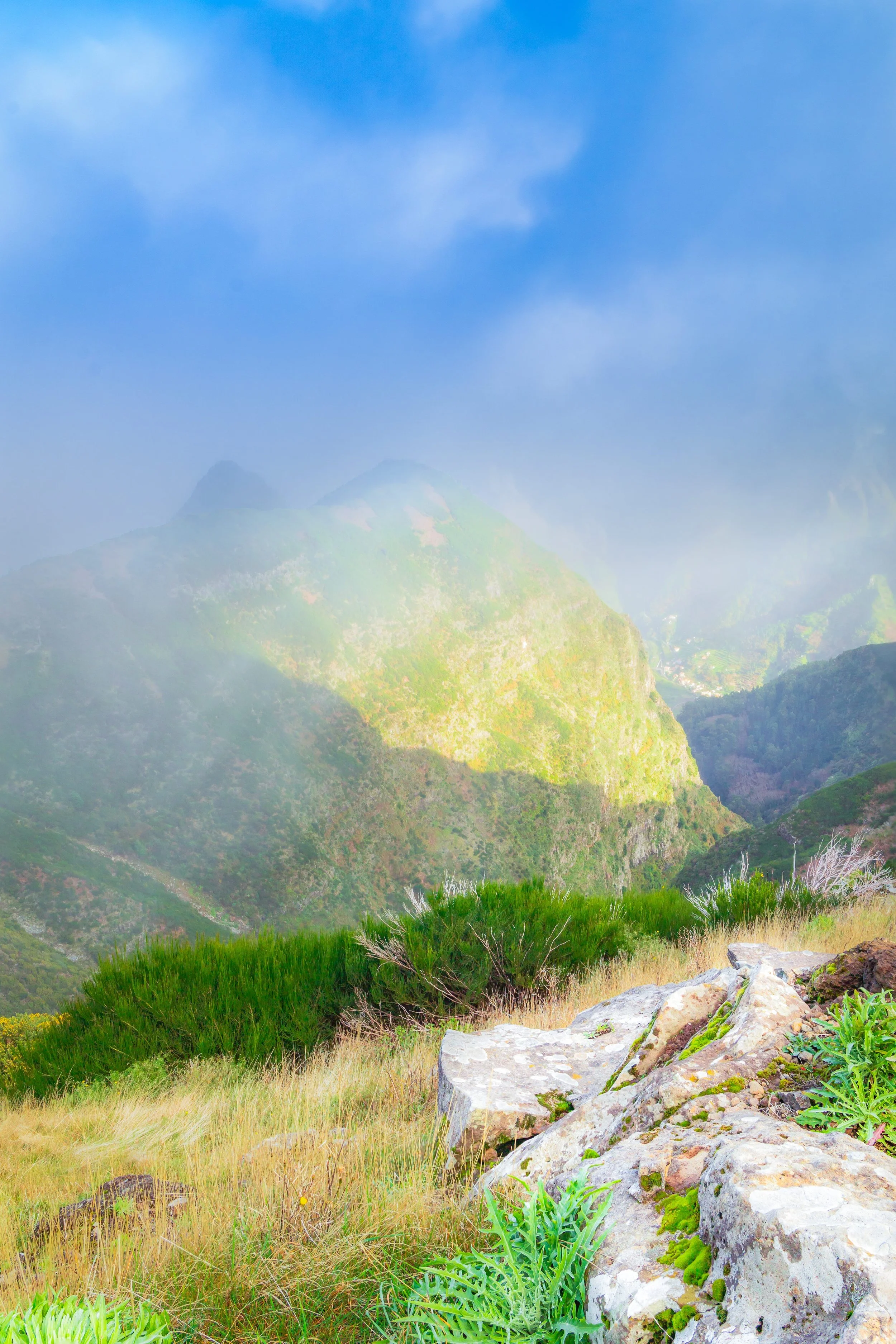
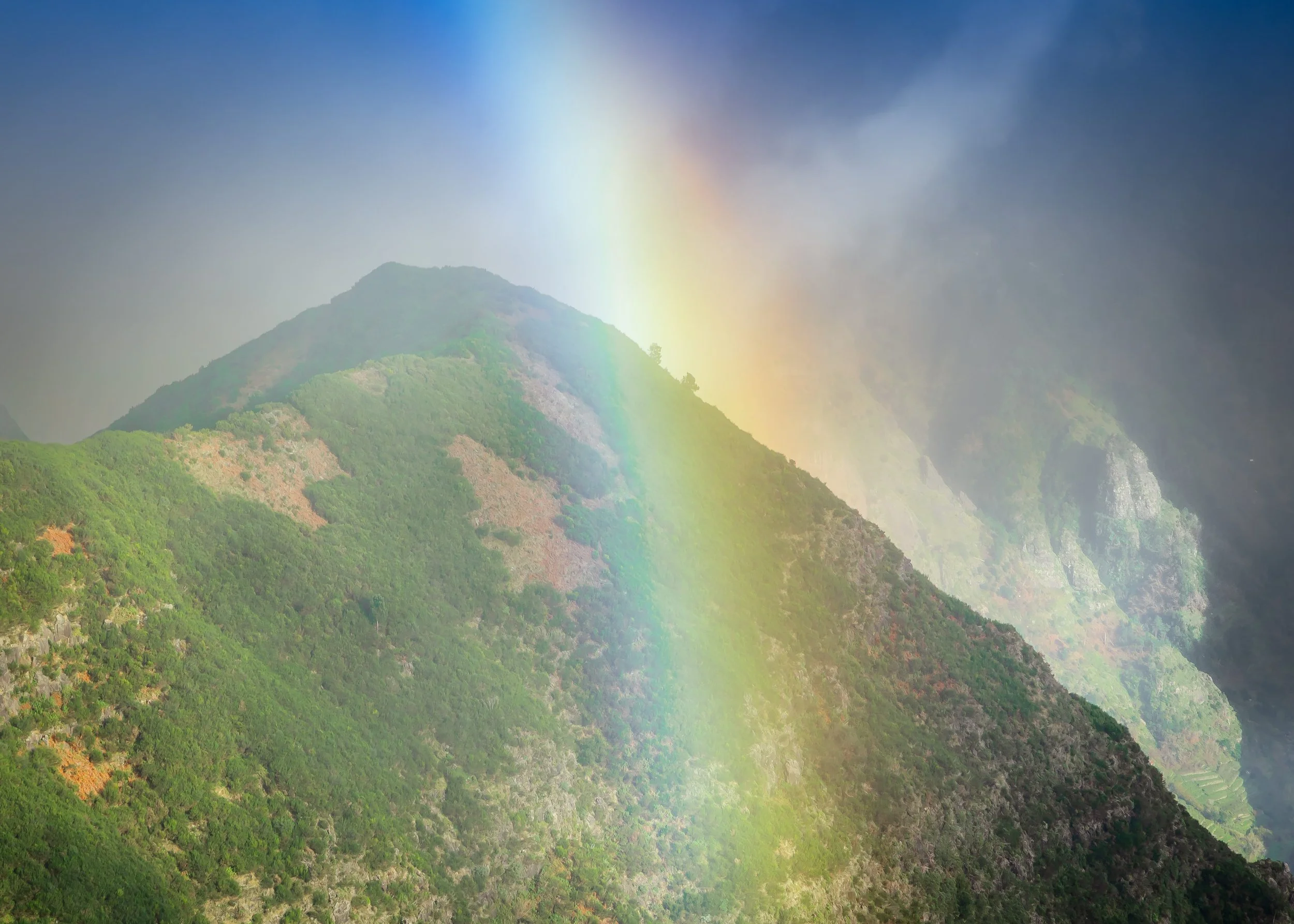
It was during this quiet stretch that a rainbow appeared – a sudden arc of colour emerging from the mist. Madeira does this often: just when you think the scene has settled, it adds a flourish.
Weather turns
The weather, however, had other plans. Clouds began to thicken behind me, creeping up the valley with the slow inevitability that Madeira specialises in. Within minutes the light had changed, the wind had picked up, and the first drops of rain arrived. I filmed a short farewell beside the car, just as a convoy of vehicles passed - including a tow truck that sounded like it was held together by determination alone. The deep thunder as it rolled down the moutain road was alarming and as it past me, I couldn’t help smile at the ingenuity of the locals. The truck had an enormous 4×4 on its back, plus it was towing a coach behind it; followed by a convoy of cars that clearly did not have the horses to try to overtake it on the moutain ridges.
Before leaving, twele year old Portugese lad approached me, with the rest of his family sheepishly looking on from afar. He wanted to ask about gear and what camera I recommended that he use. Of course, there is no single answer, and to be frank I was unsure if he meant a photography camera or something for vlogging. I answered his questions and gave a neutral response when it came to gear (which I am sure his dad would have approved of), and said my farewells.
Travel is shaped as much by brief human encounters as it is by landscapes. My norm is to seek places that are free from humans and allow peaceful meditation, but parodoxically, I always welcome a chat with friendly passersby - maybe even the odd Insta Zombie too!
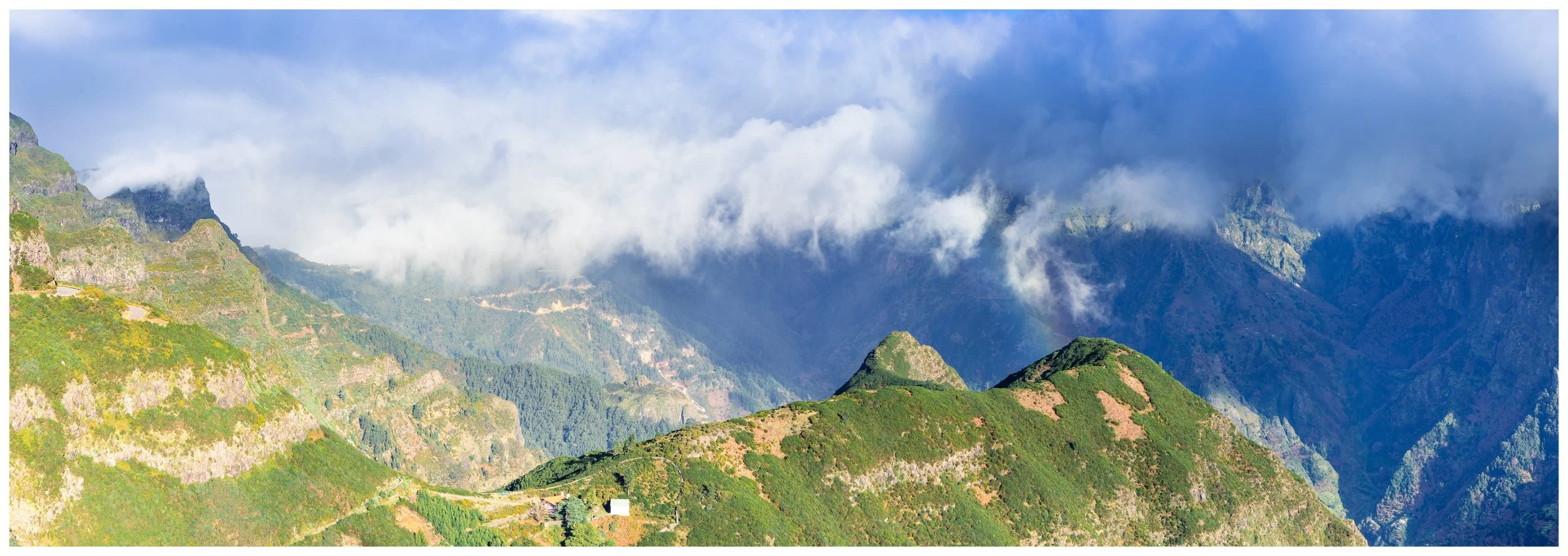
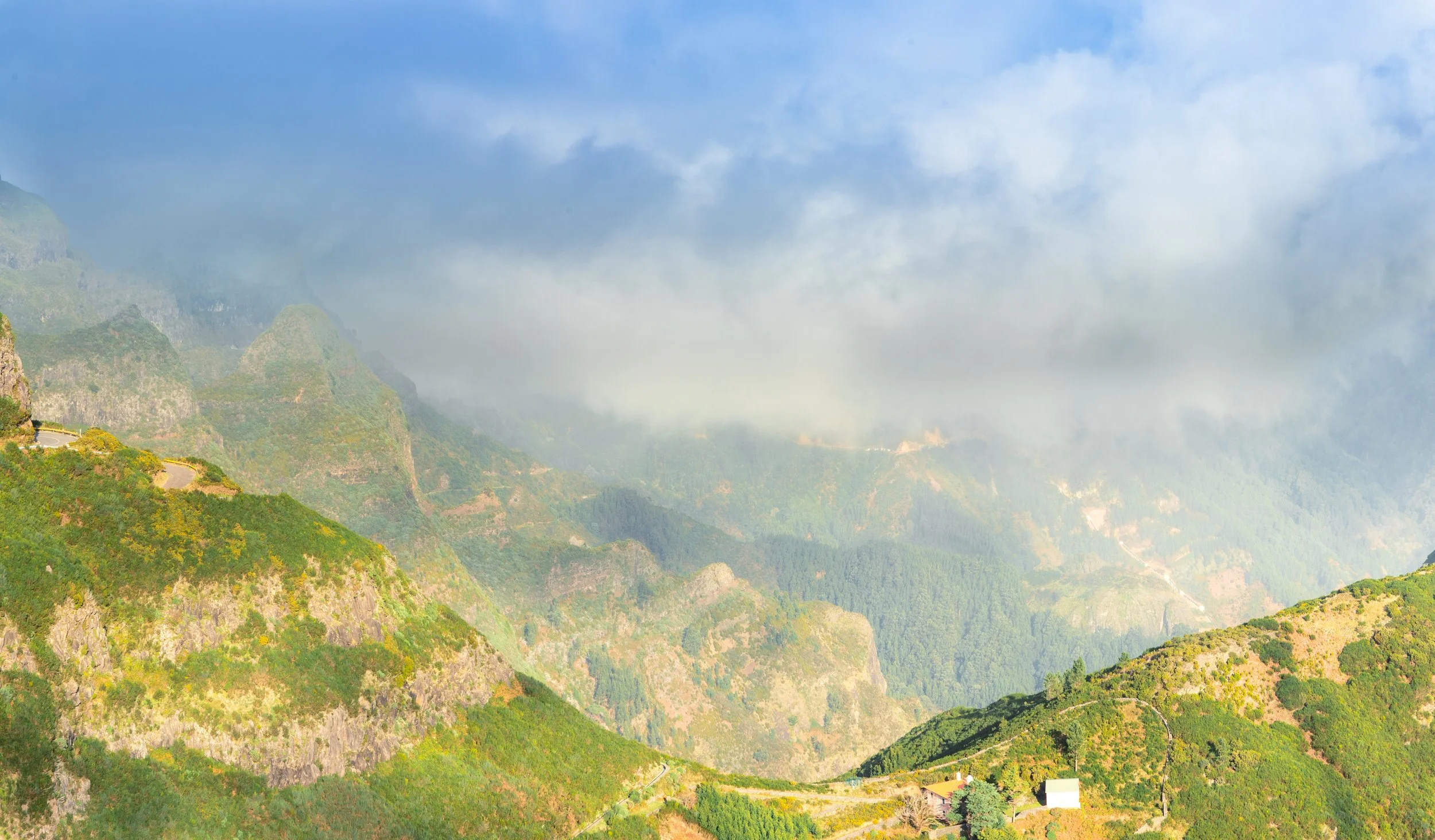
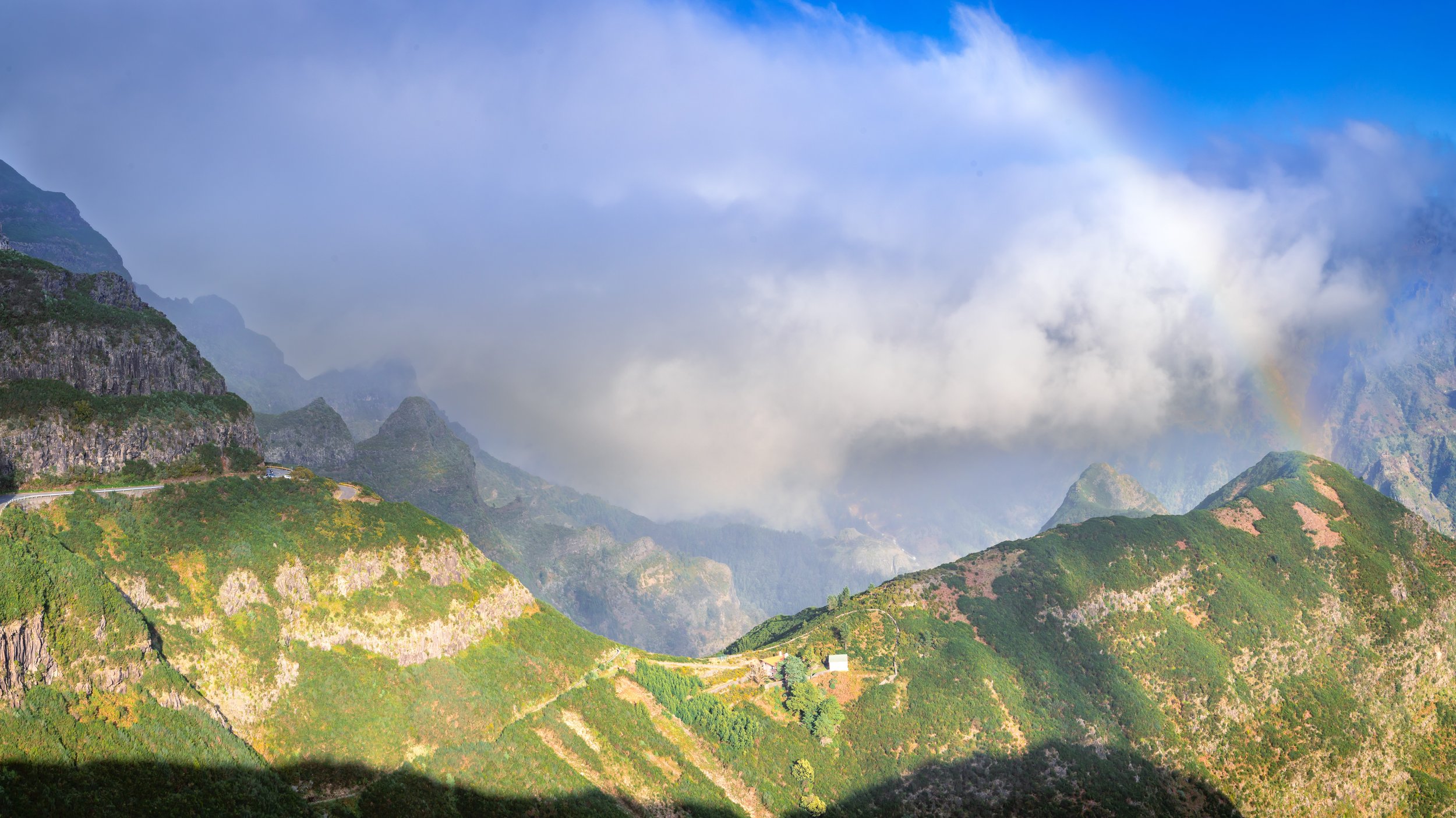
Panorama from Lombo do Mouro. Five images stiched together.
By the time I reached the lower roads, the rain had become a downpour. I stopped outside a small shop, watching the water hammer the windscreen and realising I was already reacclimatising for English winter. Madeira had given me sunshine, cloud, rainbows, and mist - all in the space of a few hours. It felt like the perfect summary of the island.
Lombo do Mouro may not be one of Madeira’s headline viewpoints, but it is one of its quiet treasures. A ridge shaped by centuries of human effort, overlooking valleys that have sustained life for generations. It is peaceful, understated, and deeply rewarding – the kind of place that reminds you why exploring without a plan can sometimes be the best plan of all.
Thanks for taking the time to read about my little adventure. I enjoy capturing my experiences, whether at home or abroad, on plateaus or mountains, through photos, videos, and written pieces—so feel free to stop by again to catch up on my latest journeys, or check out ‘My Stories’ in the menu above.
See you out there!