The Beginning of an Arctic Photography Adventure
Summer 2024
I have a long and well-established habit of intending to plan trips properly and then doing nothing of the sort. Organising holidays around work commitments always seems perfectly manageable in theory, right up until it quietly becomes "soon", then "next week", and finally "why are flights suddenly this expensive?"
Travelling alone does not help. There is nobody to prod me into booking accommodation or gently remind me that remote destinations tend not to reward indecision. And so, in the summer of 2024, I once again found myself embarking on a solo photography trip that had been planned just enough to function, but not enough to be reassuring.
Choosing somewhere cooler
What I did know, even at a relatively late stage, was that I wanted a cooler climate and dramatic landscapes. The shortlist was predictable enough: the Faroe Islands, Iceland, Scotland or Norway.
There are plenty of other destinations that would have fitted the brief, but this time I needed something that didn't involve long-haul flights or complex logistics.
More through practicality than decisive intent, I eventually settled on Northern Norway.
Many people would assume that this meant the Lofoten Islands, and initially they would have been right. I had begun planning a road trip through what is arguably the crown jewel of Nordic landscape photography. However, after a fair amount of internal debate, I began to reconsider.
Lofoten's reputation is well deserved, but popularity brings people, and people invariably bring compromise. I have always preferred quieter locations and, whenever possible, places that sit slightly beyond the obvious stopping points on the tourist trail.
I was reminded of something I once wrote on the profile page of this website: I prefer to find, or perhaps more accurately stumble upon, locations that sit just off the beaten track.
Northern Norway felt like exactly the sort of place where that might happen.
Packing: an exercise self-deception
Travelling with photography equipment has a remarkable ability to expose one's talent for self-deception.
A camera backpack containing a camera body, three lenses, a tripod, video equipment, a drone, batteries, filters, chargers, memory cards, cables and assorted accessories is objectively ridiculous. Add a laptop and external hard drives and it quickly becomes apparent that the airlines and I hold very different views on what constitutes travelling light.
Managing baggage allowances becomes something of an art form, although in reality it is mostly just a great deal of inconvenience.
The irony is that in all my years of photography, I have never actually run out of battery power. Yet I continue to pack three spare batteries every single time.
The same logic applies to lenses. Whilst I will rarely use more than two lenses at any location, I inevitably carry three because I never know which two I will need.
Looking back at the images from this trip, I could probably have photographed most of Norway with my 24-105mm lens alone. Naturally, that realisation only arrived once I had spent two weeks carrying considerably more weight than necessary.
A delayed arrival
The journey began at Manchester Airport with a flight to Oslo and an onward connection to Tromsø.The plan unravelled slightly when I missed that connection. By the time replacement flights and revised timings had done their work, I eventually arrived in Tromsø much later than anticipated. Fortunately, the weather seemed determined not to hold the delay against me. The city greeted me with bright skies and clear conditions as I collected my hire car and headed towards my hotel.
In most places, arriving late often means grabbing a rental car and navigating unfamiliar roads in the dark to find your accommodation—hardly ideal after a long journey. But Northern Norway in June offers a unique perk over nearly anywhere else: the Midnight Sun, with daylight around the clock!
Checking in should have been straightforward. It wasn't.
First, finding the hotel was anything but straightforward. At this point, it’s worth stressing the importance of downloading offline maps for your car’s SatNav and ensuring the GPS setting is on ‘accurate.’ Most of my navigation mishaps abroad have stemmed from delayed SatNav directions caused by weak signals or not having maps downloaded ahead of time. Norway likely has one of the best mobile networks and broadband coverage, but in remote areas or dense urban spots, lag can still lead to a frustrating missed turn. With Norway’s road tunnels being incredibly long, it’s best to make sure you’re in the one heading toward your intended destination—not somewhere else.
I eventually found the hotel and checked myself in; in my room I was finally able to begin to relax, until I realised that I had overlooked one rather important detail. It was Sunday.
Photography holiday, not professional assignment
It is probably worth clarifying at this point that I am not a professional photographer, nor am I a videographer in any commercial sense. If I were able to make a living out of them, I would likely be a very happy chap; the cruel reality is that neither could replace the income from my day job. So for now, the day job pays for the gear and trips, I take the photos and record the story in a little notebook, and hopefully you enjoy the tale and images.
So, these trips are not workshops, commissions or carefully optimised content-gathering exercises. They are simply holidays built around photography; an excuse to explore interesting landscapes, spend time outdoors and experience places that are very different from home.
The photographs matter, of course, but so does the experience.Which explains why the next discovery was so alarming.
As I gradually came to understand that Tromsø might be effectively dry on a Sunday, a level of concern began to develop that was entirely disproportionate to the situation but no less genuine because of it.
A glass or two of wine on the first evening of a holiday is, for me, less an indulgence and more a ritual. It marks the end of travelling and the start of the adventure. The possibility that this ritual might be under serious threat caused what can only be described as mild panic.
Norway, Sundays and the absence of grape juice
In most countries, arriving on a Sunday afternoon would be of little consequence. In Norway, however, Sunday comes with strict licensing laws regarding the sale of alcohol, something I had neglected to research before travelling.
After dropping my bags, I set off in the hire car to find a supermarket or local shop that might sell some basic supplies. Included within my rather broad definition of "basic supplies" was a decent bottle of wine. Almost every shop I could find appeared to be closed. After roughly an hour of increasingly hopeful driving, I eventually located a small convenience store. The shelves were stocked with groceries, household essentials and a reassuring number of local residents completing their Sunday shopping.
What they did not contain was wine. I completed several increasingly thorough laps of the shop, convinced that I must simply have missed the relevant aisle. I hadn't.
The shop assistant, who spoke excellent English, kindly explained Norway's alcohol licensing system and introduced me to the concept of Vinmonopolet stores, specialist shops responsible for selling stronger alcoholic drinks. Unfortunately, every single one of them was closed.
My hotel's restaurant was also closed on Sundays and Mondays and, for reasons best known to Norwegian licensing regulations, could not sell wine to take back to my room (and no, there was no in-room refreshments - you know, the mini-bars that will sell you a minature can of coke for £20 or packet of nuts for £10).
Tromsø, it seemed, was committed to giving me a remarkably sober introduction.
An Italian Restaurant Saves the Day
Thankfully, all was not lost.
I eventually discovered that restaurants remained open on Sundays, and before long I had secured a table at what was reputed to be one of Tromsø's better Italian restaurants.
A taxi was ordered. A crisis was averted. Shortly afterwards, I found myself seated in a bright and cheerful dining room enjoying a starter, a pizza and, perhaps more importantly, a bottle of wine. I later worked out that the wine had cost approximately £45. At that point, however, I considered it money very well spent. The restaurant was called Casa Inferno. I recall the waitress explaining the most of their ingredients were imported from Italy which I found very impressive, especially given how difficult my relatively shorter journey had been.
By the time the evening drew to a close, the frustrations of delayed flights, closed shops and unexpected licensing laws had faded into the background.
I was finally in Norway. The adventure had begun.
Day two: above Tromso
Despite my best efforts the previous evening, I awoke surprisingly functional.
The weather outside was cloudless, the air felt crisp and fresh, and the city was basking in glorious early June sunshine.
My plan for the day was straightforward: take the Fjellheisen cable car above Tromsø and make my way towards Tromsdalstinden, the mountain that dominates the skyline east of the city.
After breakfast I booked a taxi to the lower cable car station. The journey itself proved unexpectedly interesting. As we crossed the city beneath bright blue skies and drove along completely dry roads, my driver casually mentioned that only a couple of weeks earlier much of Tromsø had been buried beneath around a metre of snow. A meter!
Looking out at the sunshine and green hillsides, it was difficult to imagine. Yet this was a useful reminder that summer, particularly this far north, arrives on its own terms.
Fjellheisen
Opened in 1961, Fjellheisen has been carrying visitors up the mountainside for decades and remains one of Tromsø's most popular attractions. Within minutes of boarding the cable car, the city began to fall away beneath me.
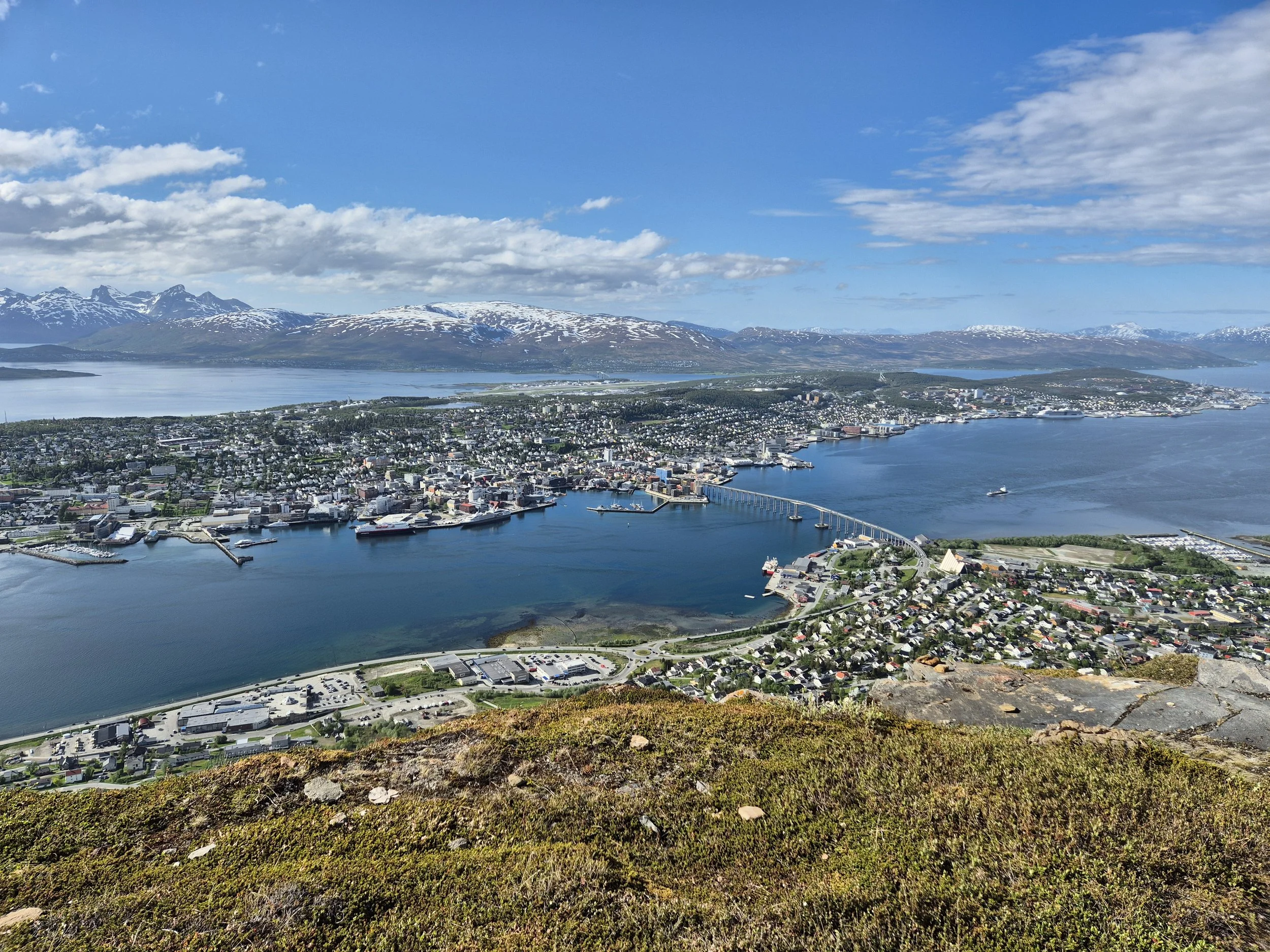
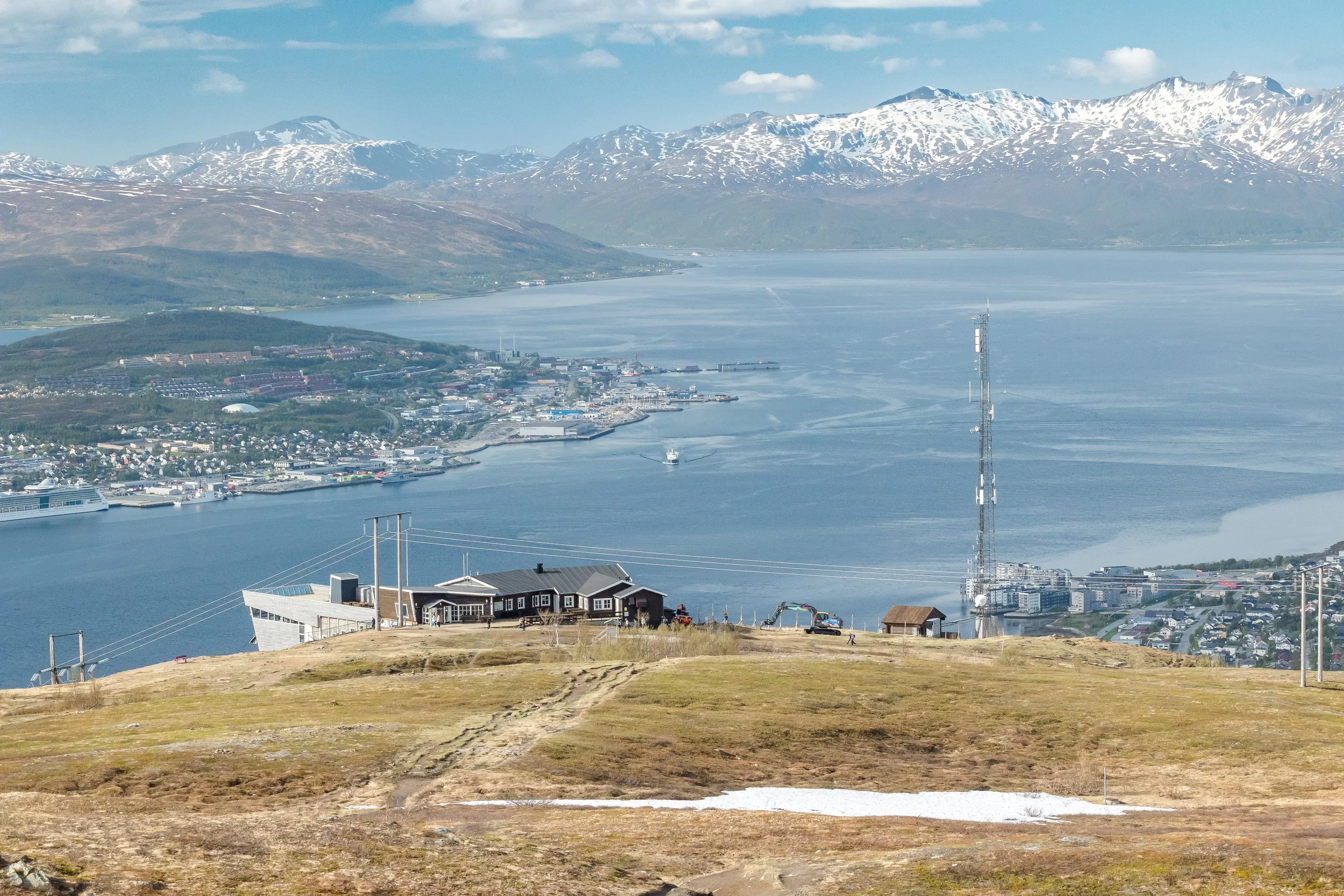
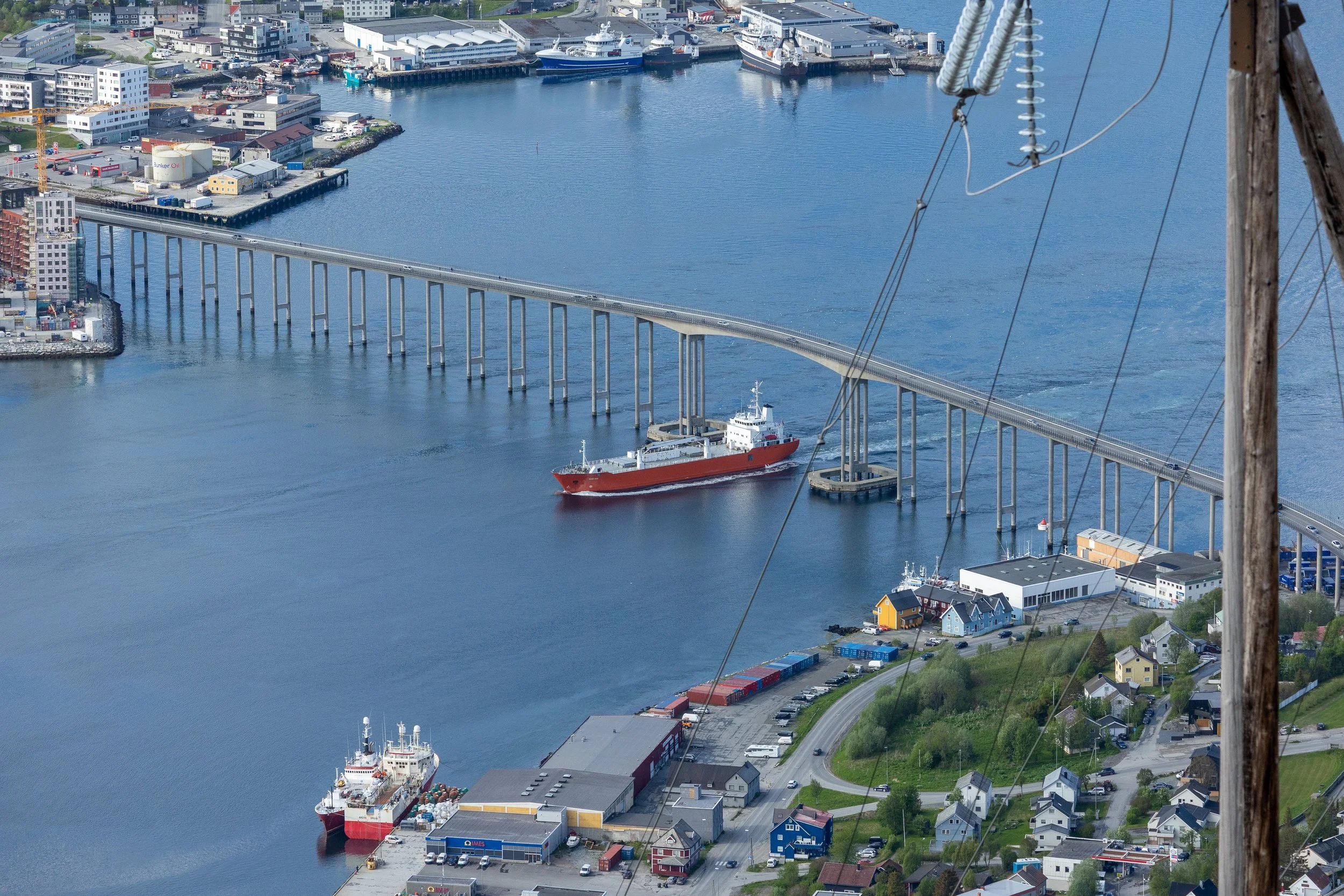
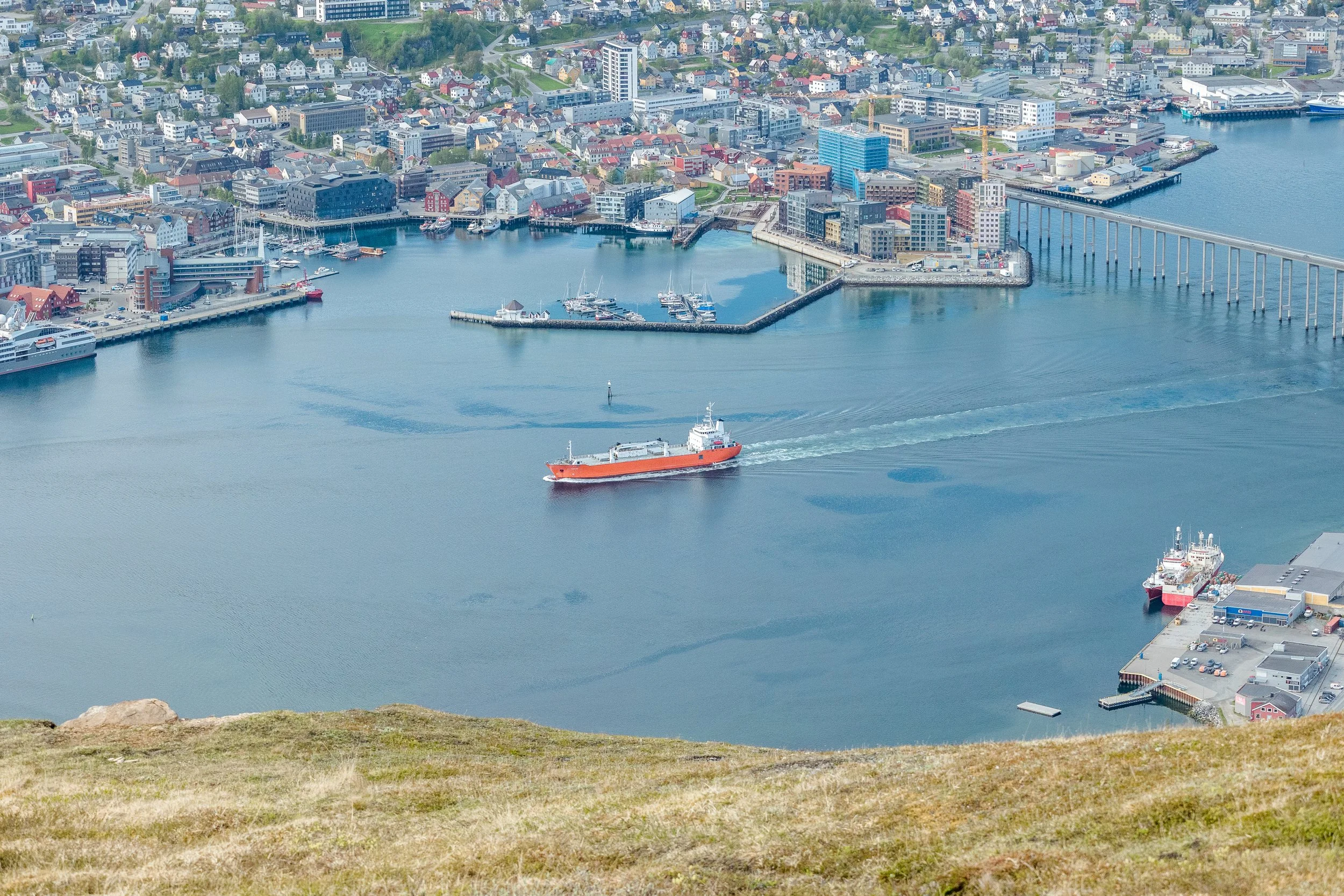
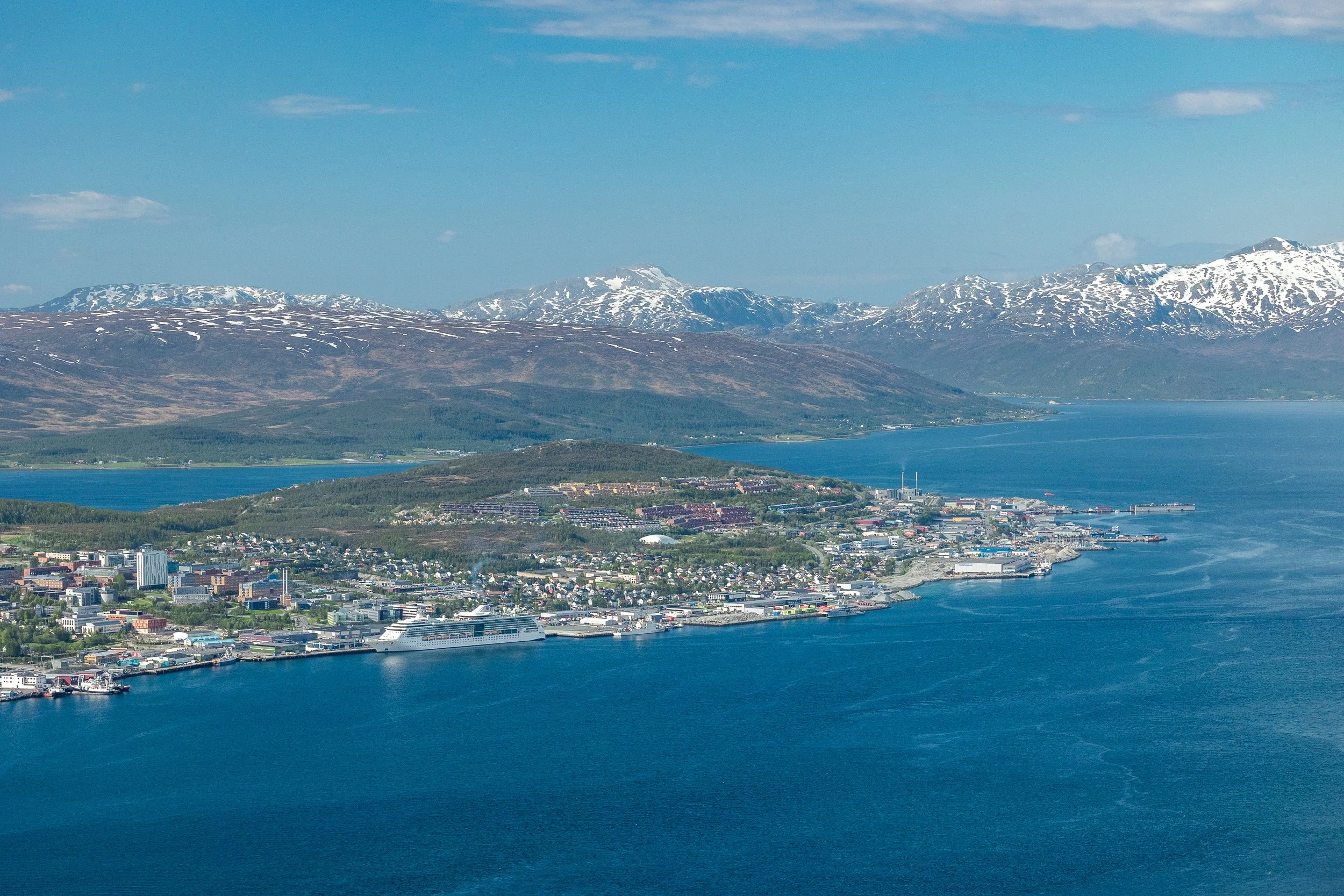
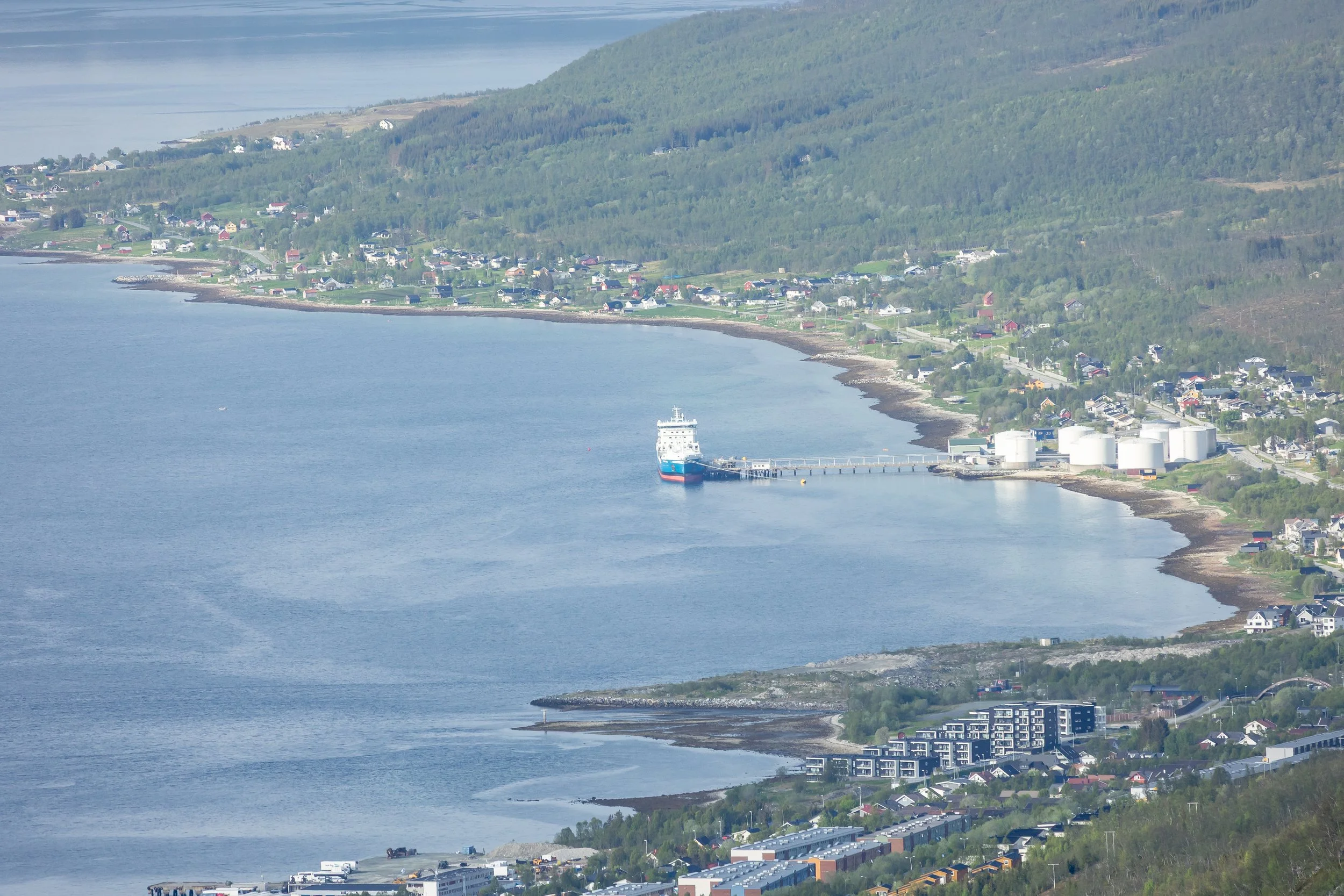
Tromsøya, the island on which most of Tromsø sits, gradually revealed itself below. The bridges connecting the island to the mainland became increasingly delicate, whilst the surrounding fjords and mountain ranges stretched further towards the horizon with every metre climbed.
The views were magnificent. They were beyond anything I had ever witnessed in my entire 54 years.
The atmosphere, however, was somewhat less tranquil.
The loudest viewpoint in the Arctic
Stepping out onto the terrace at the upper station, I was greeted by one of the finest views in Northern Norway.
I was also greeted by what appeared to be several coachloads of enthusiastic American tourists.
To be fair, they were clearly enjoying themselves. Judging by their attire, many had concluded that temperatures above freezing in the Arctic Circle constituted beach weather. T-shirts were plentiful. Voices carried impressively well in the mountain air. One appeared to be hold a phone conversation with a relative back home, but seemingly oblivious of the technology they were holding, preferring to shout across the Atlantic to make themselves heard.
The result was a viewing platform that somehow managed to feel simultaneously vast and crowded. I lingered long enough to appreciate the panorama and take a few photographs before deciding that the mountain above the station looked considerably more appealing than the viewpoint below it.
If I wanted peace and quiet, I was going to have to earn it.
Towards Tromsdalstinden
The name Tromsdalstinden translates roughly as "the peak above the Tromsø Valley" and, at 1,238 metres, it forms one of the most recognisable landmarks in the region.
Its broad slopes rise dramatically above the city and have long been regarded as an important local mountain. From below, it appears distant and imposing. Once on the trail, however, it becomes something altogether more inviting. The ascent is not arduous - even for an overweight 50+ year old as I was then.
The climb immediately left the crowds behind. Within a surprisingly short distance of the cable car station, the noise faded away and was replaced by little more than birdsong, the occasional mountain breeze and the sound of my own footsteps.
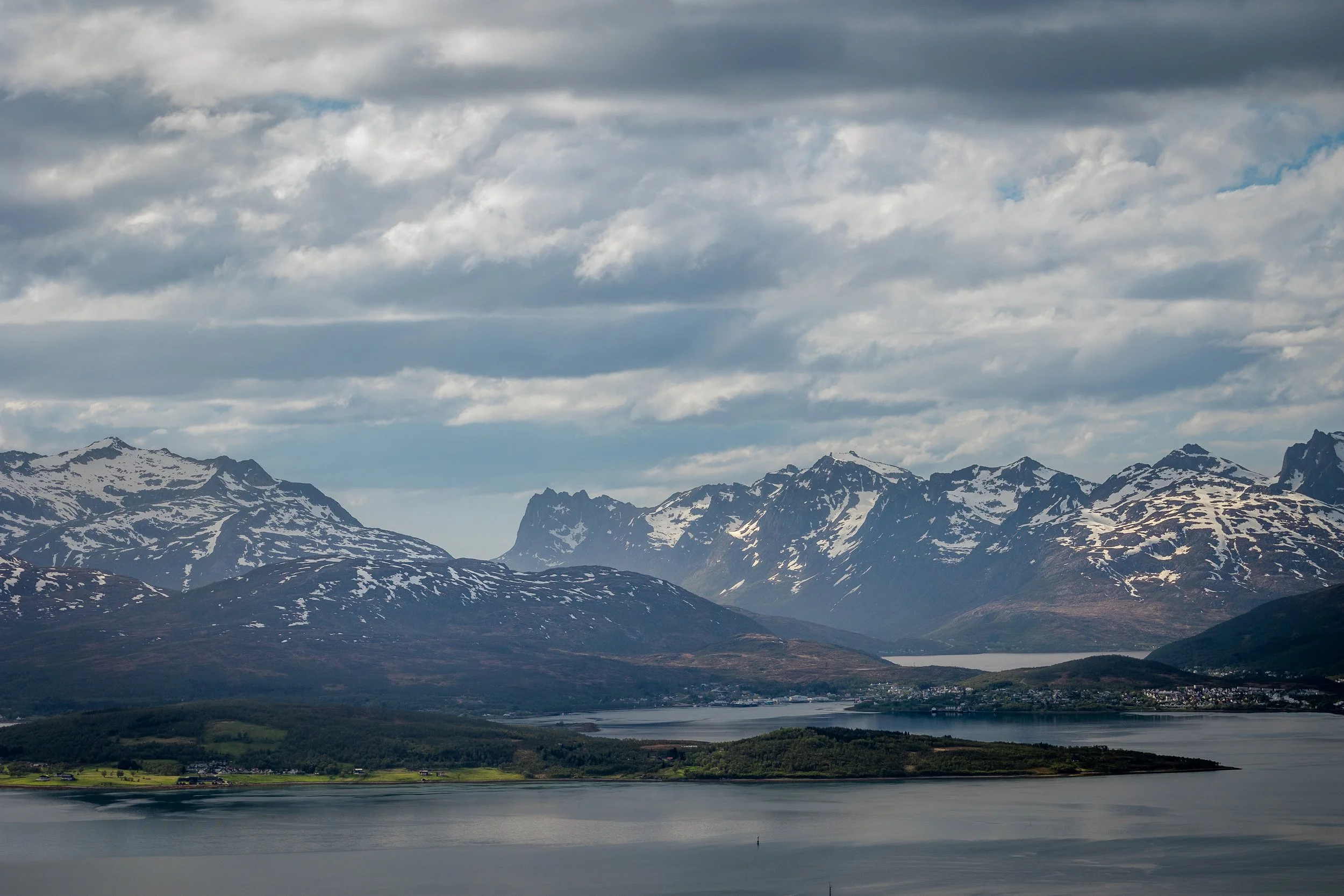
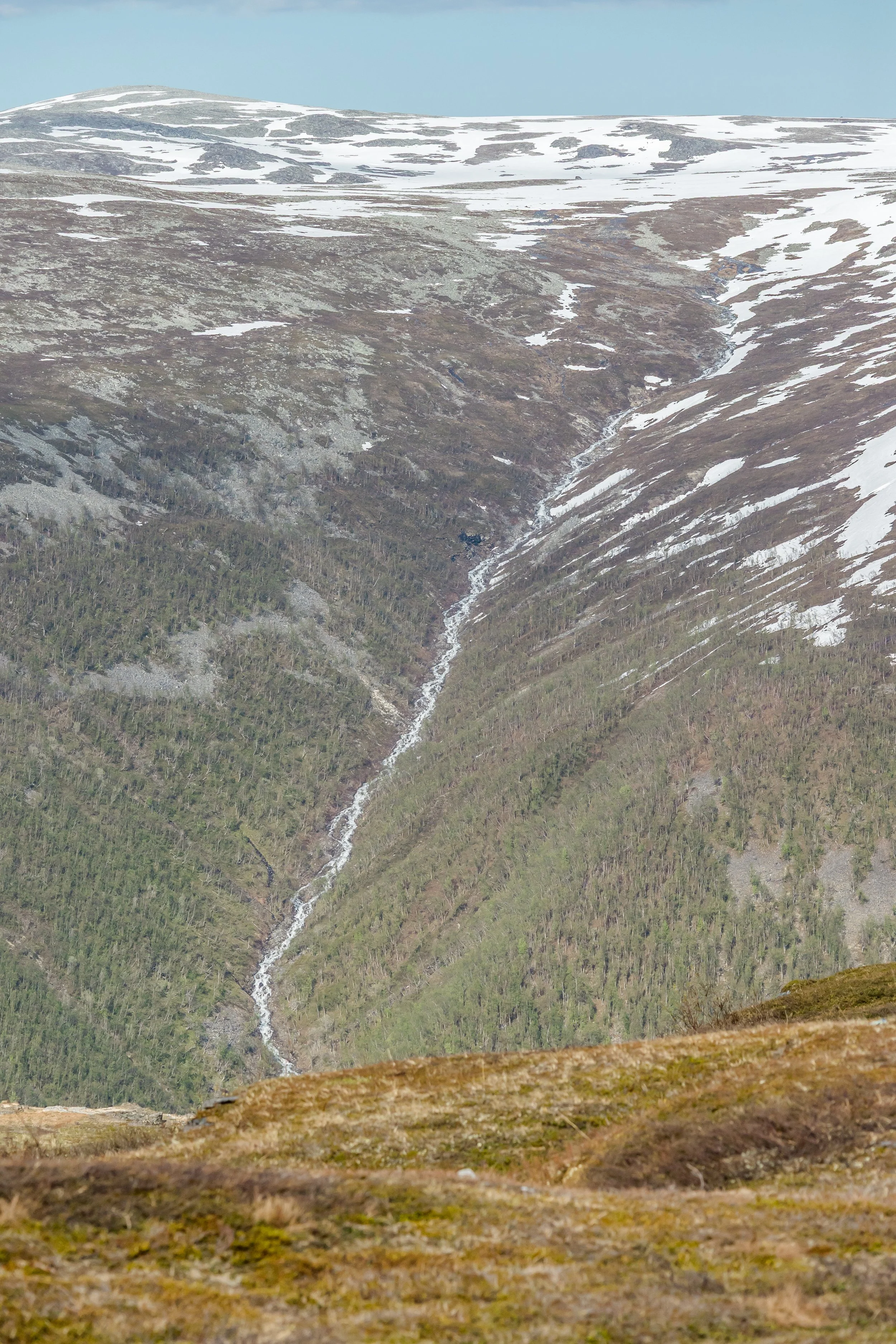
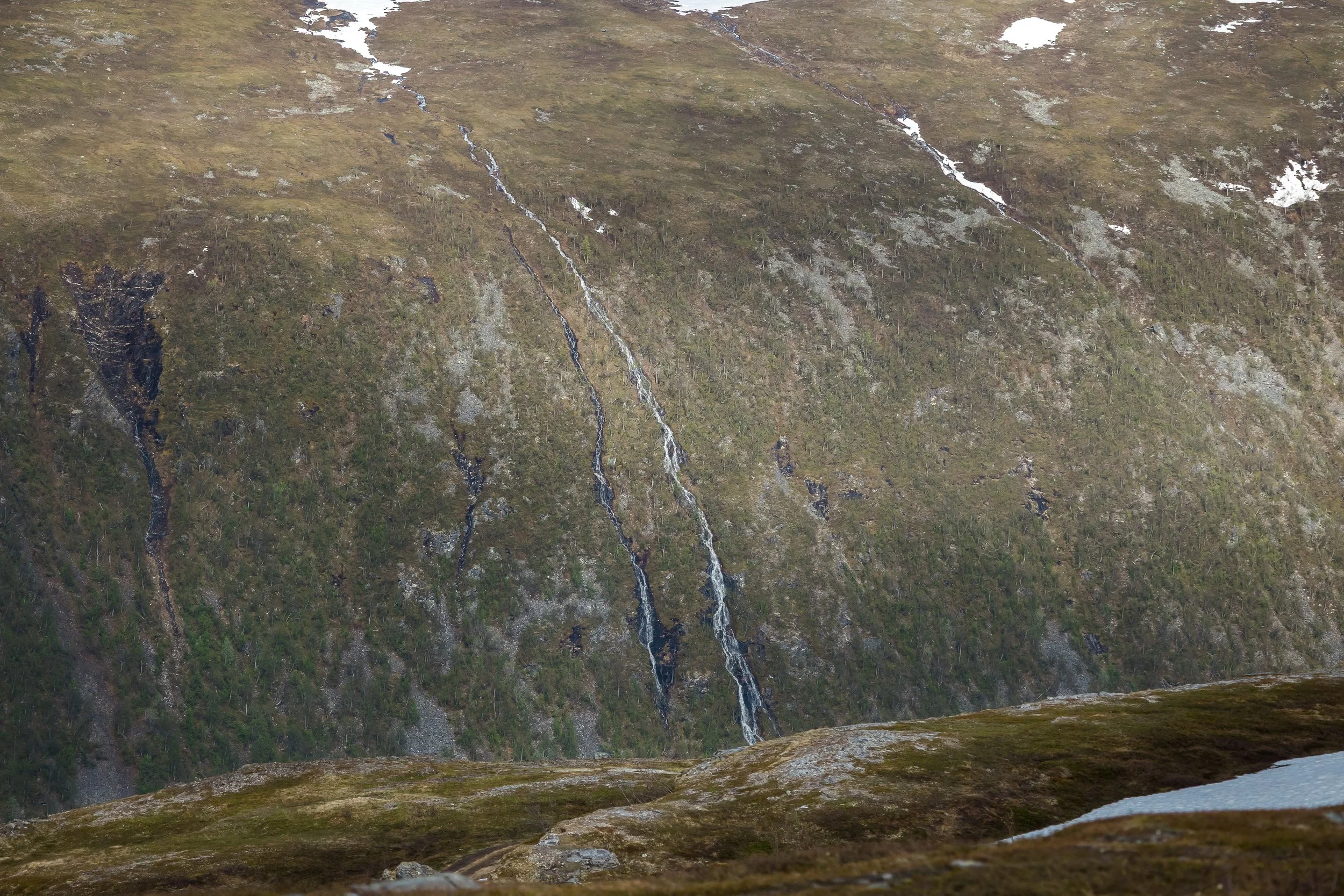
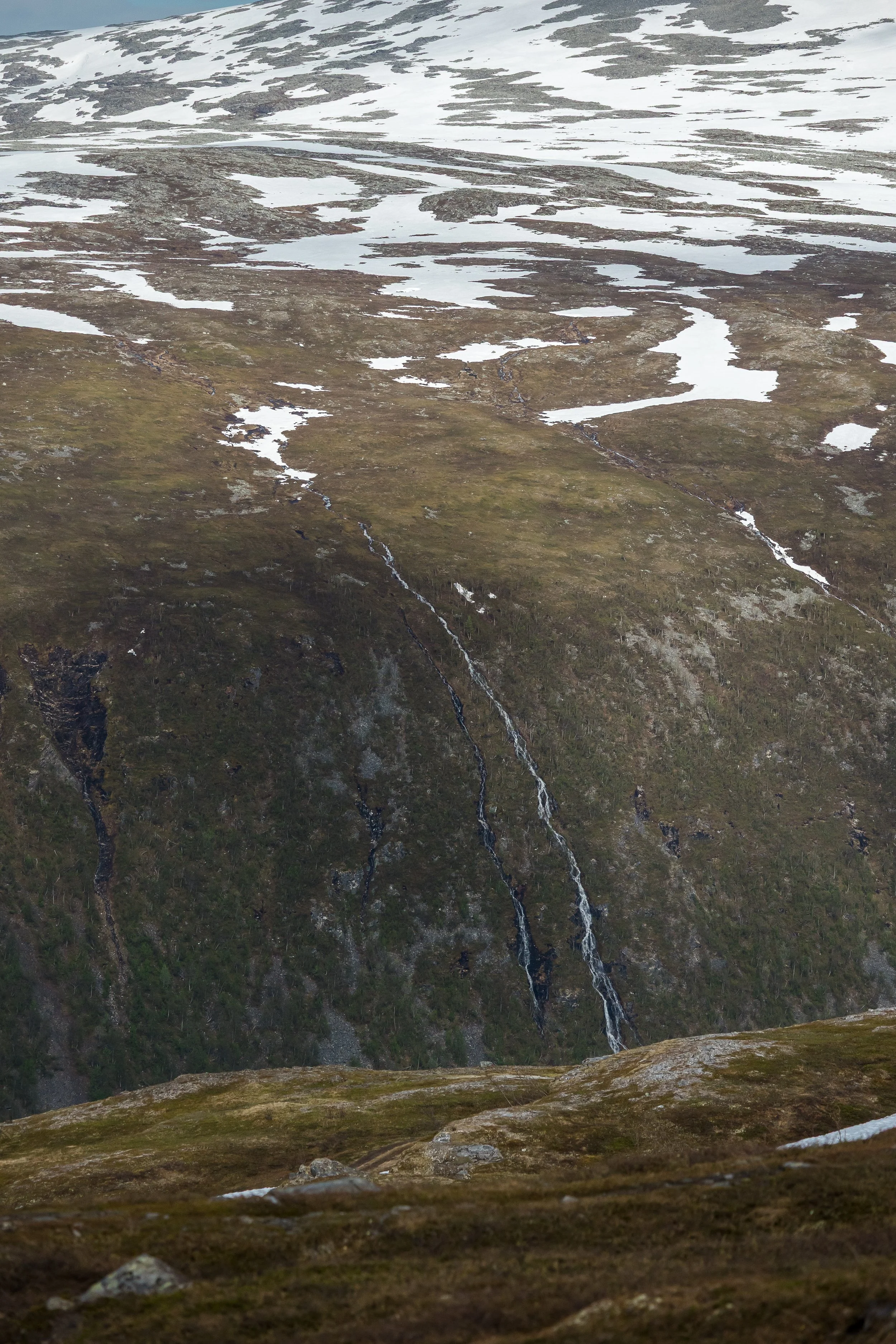
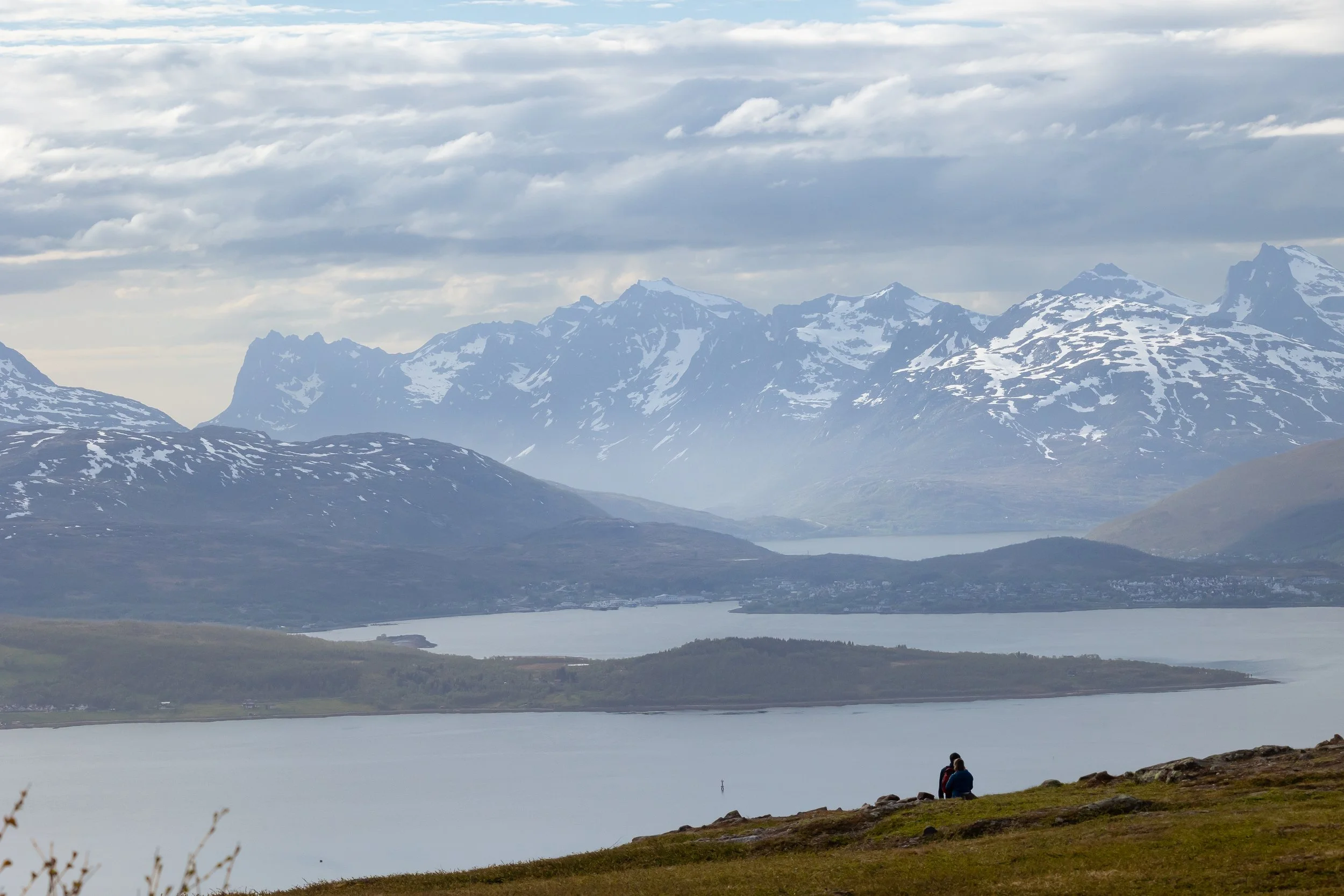
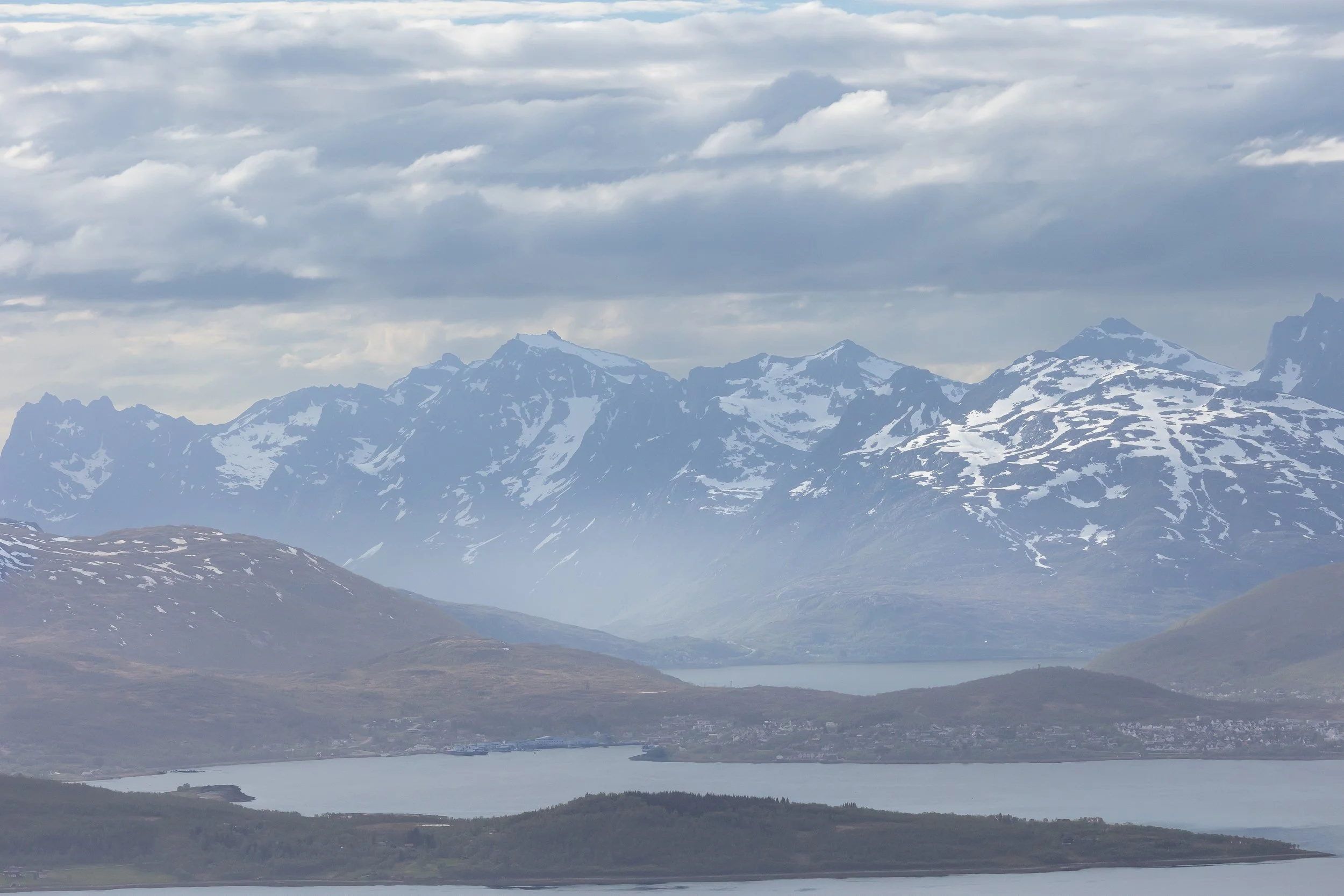
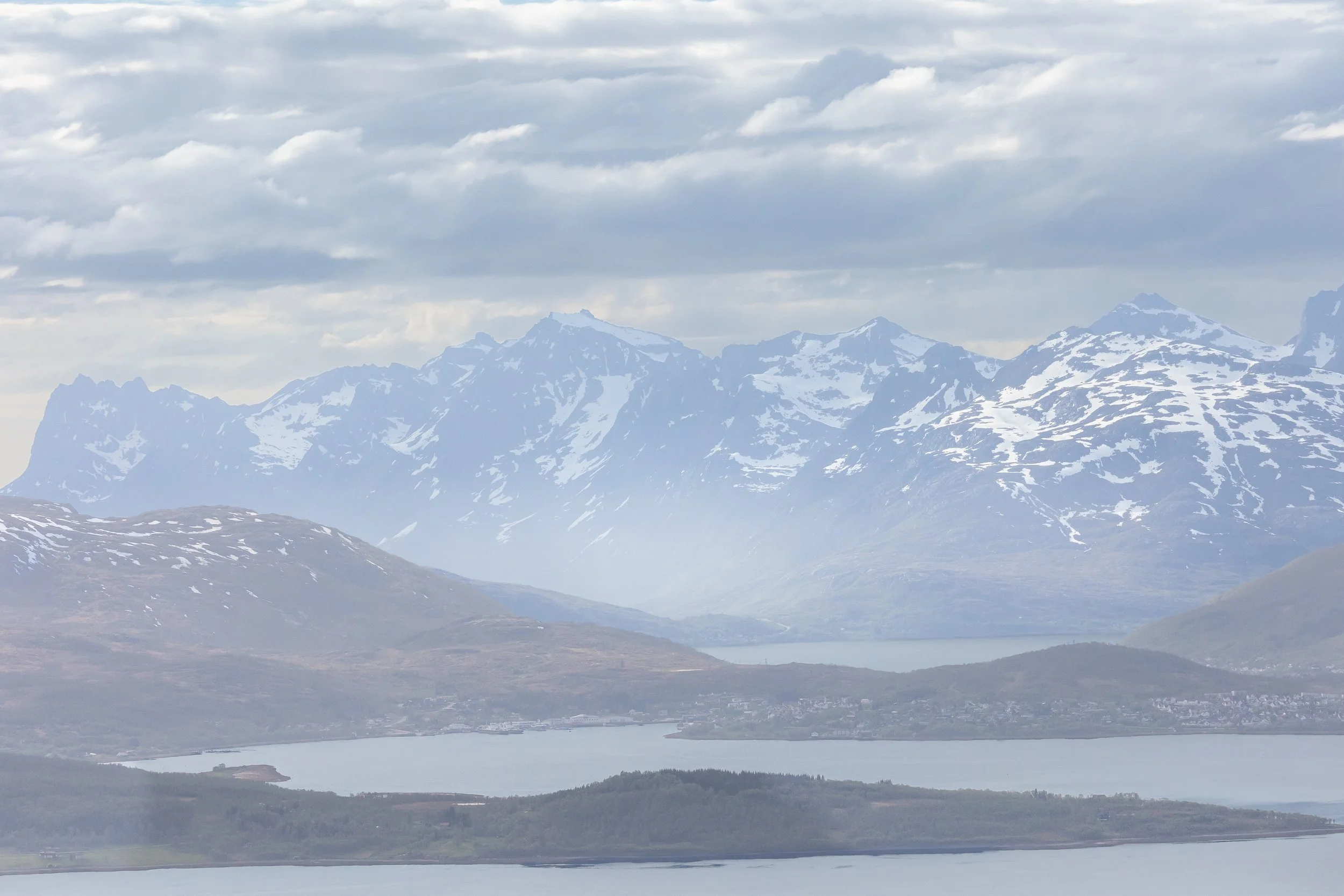
The higher I climbed, the more expansive the views became. Looking back, Tromsø shrank steadily into the landscape. Beyond it lay an endless procession of peaks, valleys, islands and fjords. The scale of Northern Norway was beginning to reveal itself.
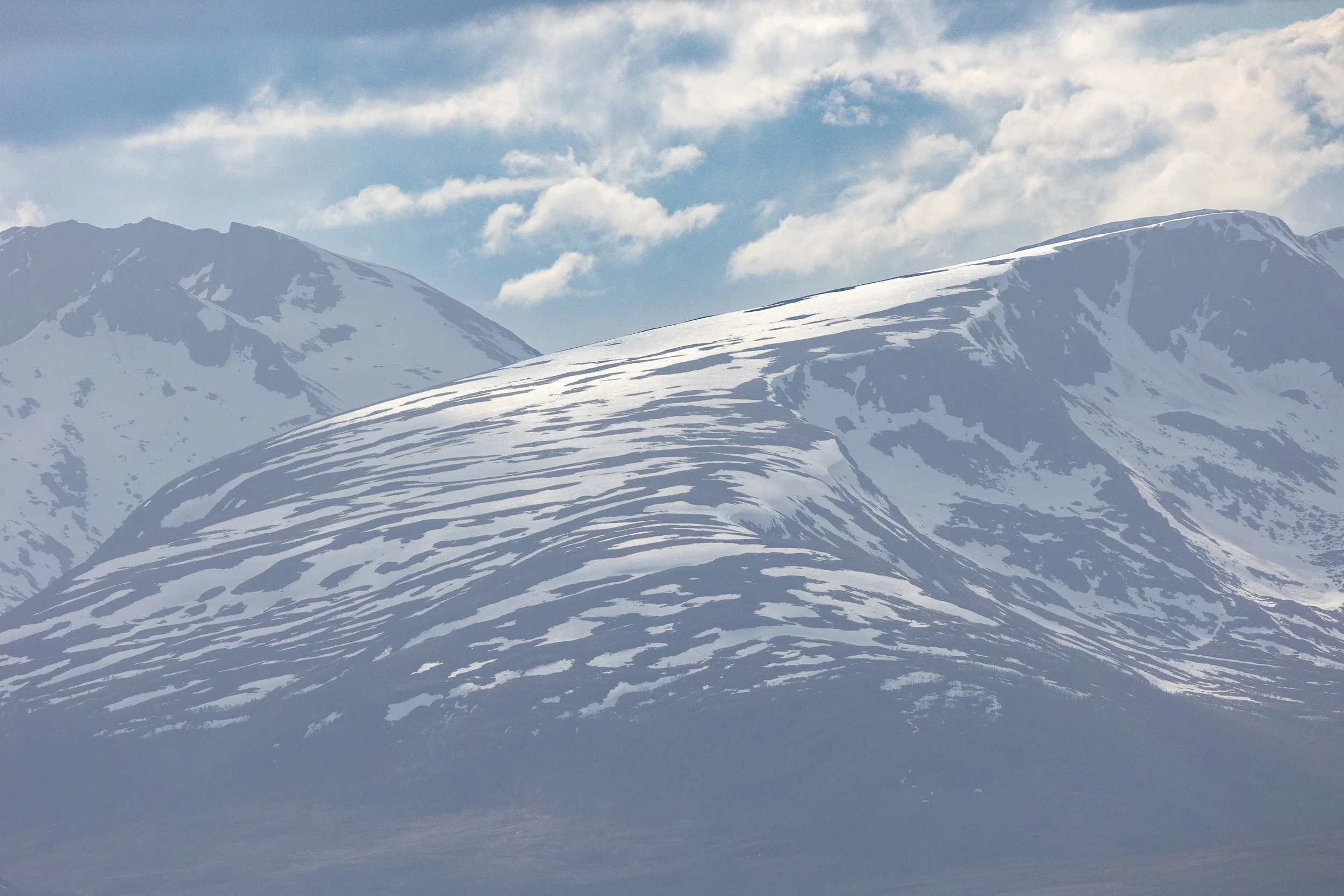
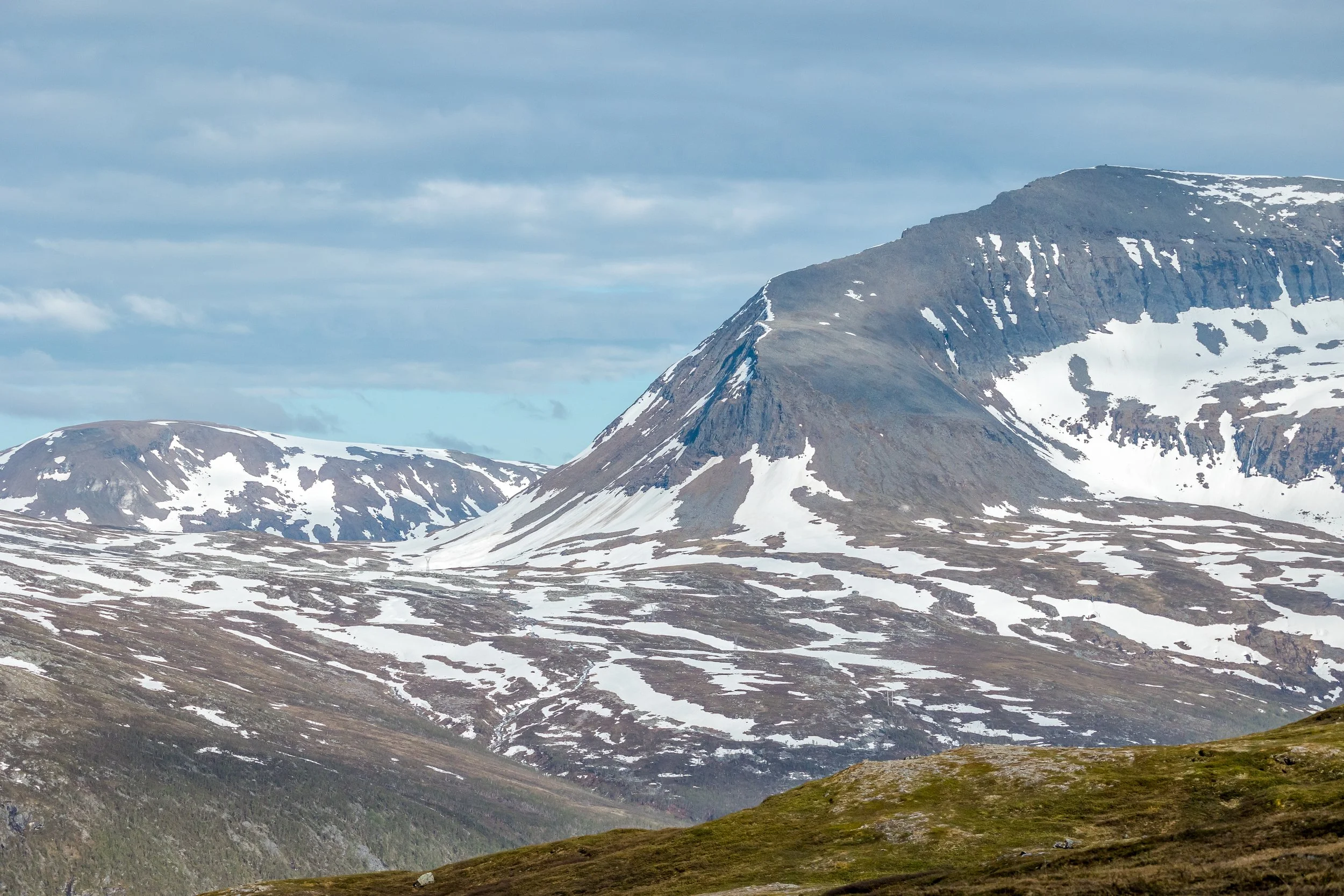
Photographically, I started with a few wider shots to capture the mountain environment. Before long, however, my Canon RF 100-400mm lens became the lens of choice. Layer after layer of distant mountains unfolded across the horizon, creating endless opportunities to isolate shapes, ridgelines and pockets of lingering snow.
The further I climbed, the more photographs seemed to present themselves.
Crossing the snowfields
Although it was June, winter had not entirely relinquished its grip on the upper slopes.
Huge ribbons of snow still clung stubbornly to the mountainside, cutting across the route like frozen rivers.
From a distance they looked harmless enough. Up close they were considerably less reassuring. Each crossing required a degree of commitment. The snowfields stretched steeply away below and, despite every rational part of my brain assuring me that they had survived far worse than my presence, there remained a persistent concern that the entire slope might suddenly decide to continue its journey downhill with me attached.
The reality was probably far less dramatic. The imagination, however, is rarely interested in reality at such moments. I crossed each one carefully and, if I am honest, rather nervously. But it was worth it.
A place of quiet
Eventually the mountain eased and the terrain opened up. The noise of the cable car station had long since disappeared. The city itself seemed a world away.
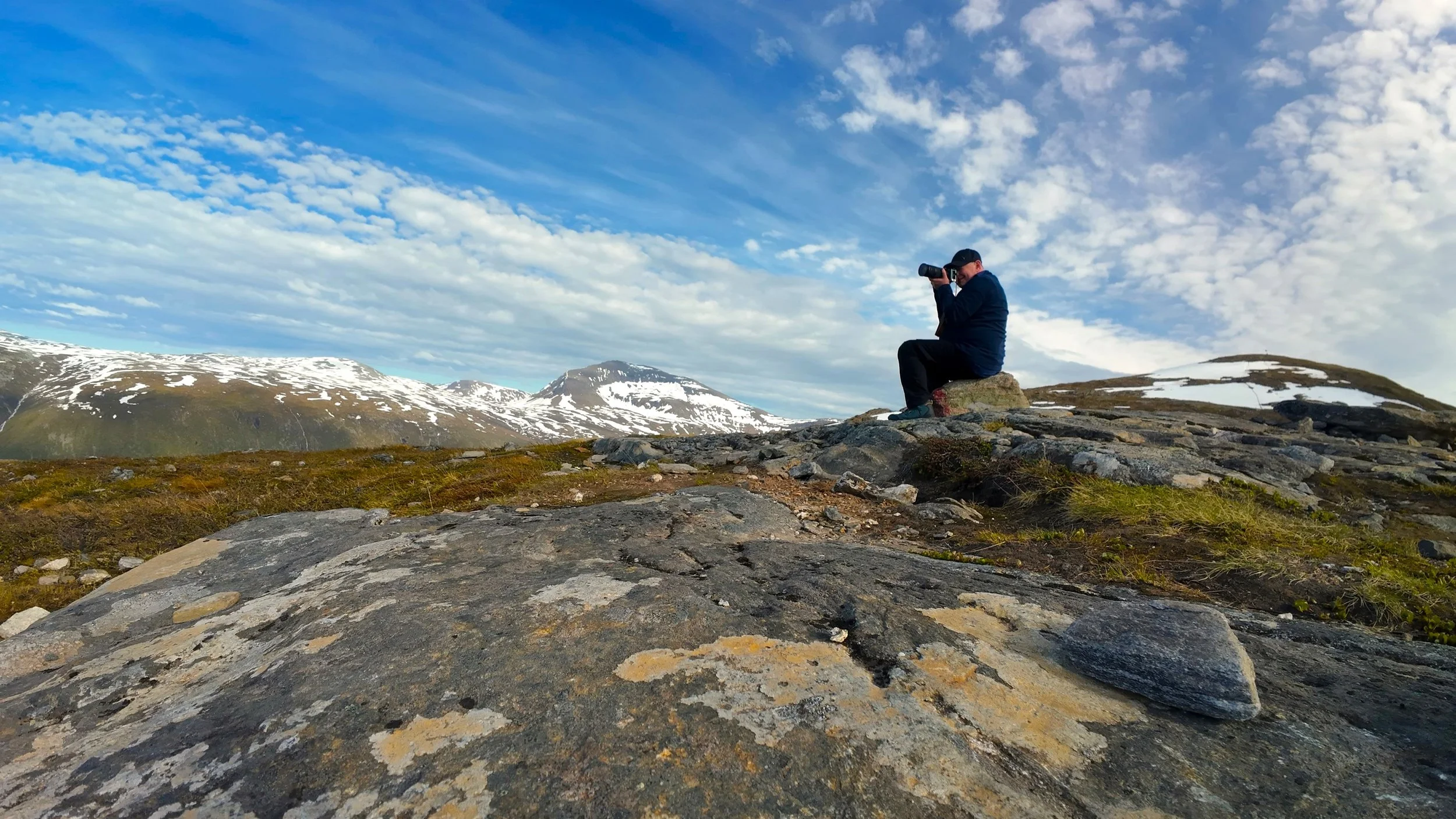
I stopped for a while, not because I had to, but because it felt like the right place to stop. The air was wonderfully fresh. The early June sunshine provided warmth without heat. Above me was an uninterrupted blue sky. Below me lay Tromsø, scattered amongst mountains, islands and water. Further north and east, mountain ranges rolled away towards horizons I could not name; but ones that I would get closer to over the coming days.
It is difficult to properly describe the sensation. Landscape photographers often talk about locations, compositions and light; as do I. Yet sitting quietly on the slopes of Tromsdalstinden, camera resting beside me, what I remember most is simply the feeling of being there. The calmness. The scale. The space.
The photographs mattered, of course, but for a while I found myself doing very little photography at all. Instead, I simply sat and watched Northern Norway unfold around me.
Beer with a view
Eventually, satisfied with the walk, a memory card full of images and lungs full of fresh Arctic air, I retraced my steps back down to the upper station at Fjellheisen.
There was, however, one final priority before descending back to the city. The mountain restaurant.
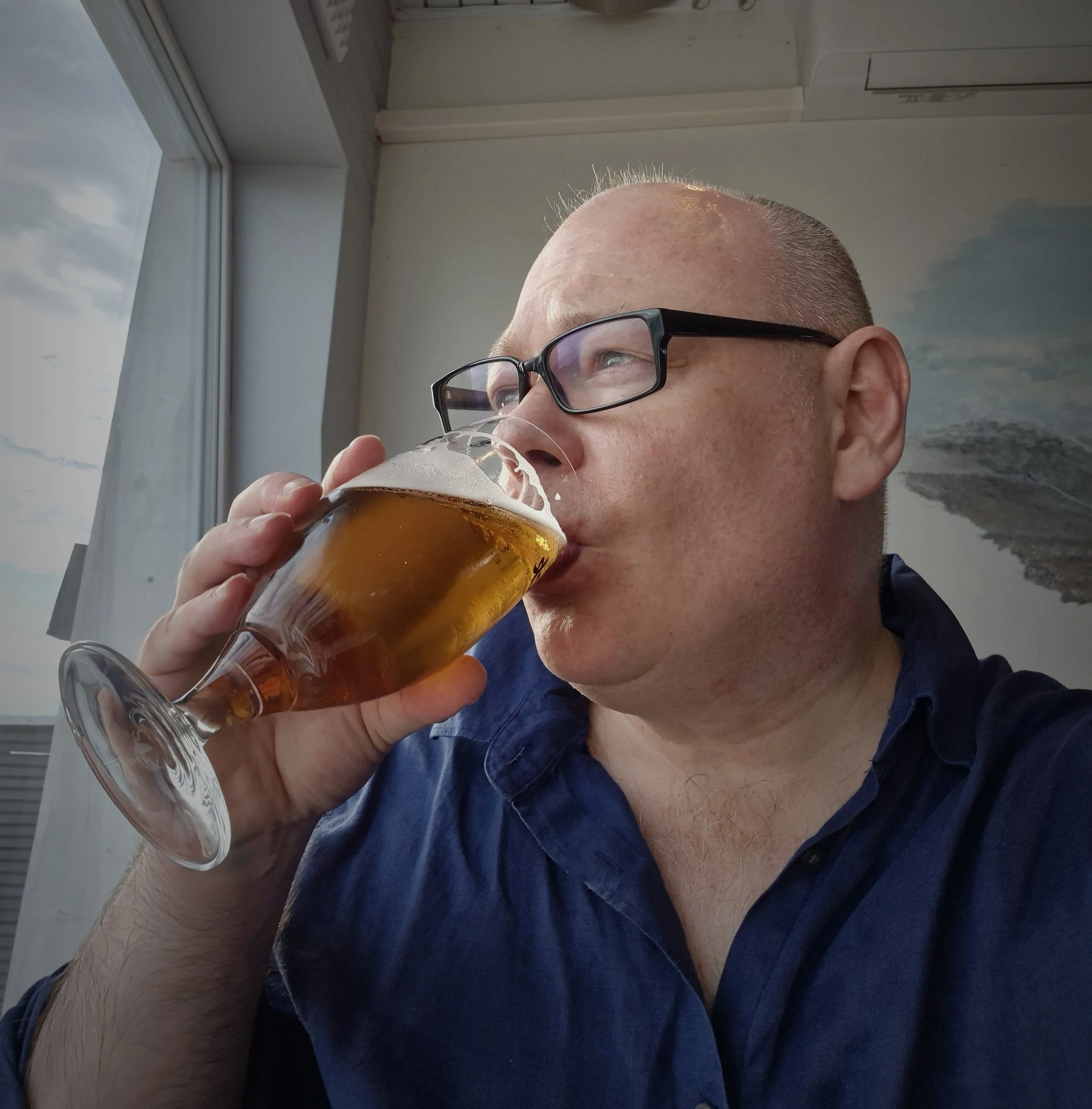
Having thoroughly earned it, I ordered what would become my first Norwegian pint and found a seat overlooking the extraordinary panorama below. There are certainly cheaper places in the world to enjoy a beer. There are also very few with a better view.
For a while I sat quietly, pint in hand, watching the city below and the mountains beyond. It felt like an appropriate reward for the afternoon’s efforts.
Back to Sea Level
Refreshed and considerably more relaxed, I boarded the cable car and returned to sea level.
Curiously, rather than calling a taxi, I decided to walk back across the city to my hotel, the St Elisabeth Suites & Spa. The journey is a little over three miles, depending on the route taken, and was entirely unnecessary. Naturally, I did it anyway.
There was one brief detour on the way. Burger King. Somewhere between mountain solitude and a lengthy walk through Tromsø, a burger had become essential.
As combinations go, it was perhaps not the most authentically Norwegian end to the day, but it was an enjoyable one nonetheless. Later that evening I returned to the hotel tired, content and carrying the satisfaction that only comes from a day spent outdoors. I slept exceptionally well.
Ahead lay fjords, ferries, remote coastlines and adventures I had not yet imagined. For now, though, Northern Norway had provided the perfect introduction.
The behind the scenes video
Thanks for reading. Now if you’d like to watch the experience, below is the video on YouTube.
See you out there!