Holy Island – part 2: the castle, the cloud, and the couple who escaped me
A piece from my April 2026 visit
Introduction – the real reason I came here
After my peaceful wander around Lindisfarne Priory in Part 1, I could finally admit the truth: the priory was lovely, atmospheric, and historically important - founded in AD 635 by Saint Aidan, home to the monks who created the Lindisfarne Gospels, and famously raided by Vikings in 793 AD, an event often cited as the very start of the Viking Age. But despite all that grandeur, it wasn’t the main reason I’d come to Holy Island.
I was here for the shot - the photograph of Lindisfarne Castle glowing in warm evening light. The castle began life in the 1550s as a Tudor fortification perched dramatically on Beblowe Crag, guarding the harbour and watching for Scottish or continental threats. It wasn’t until 1903 that Sir Edwin Lutyens transformed it into the iconic silhouette we recognise today - all clean lines, stone curves, and architectural confidence.
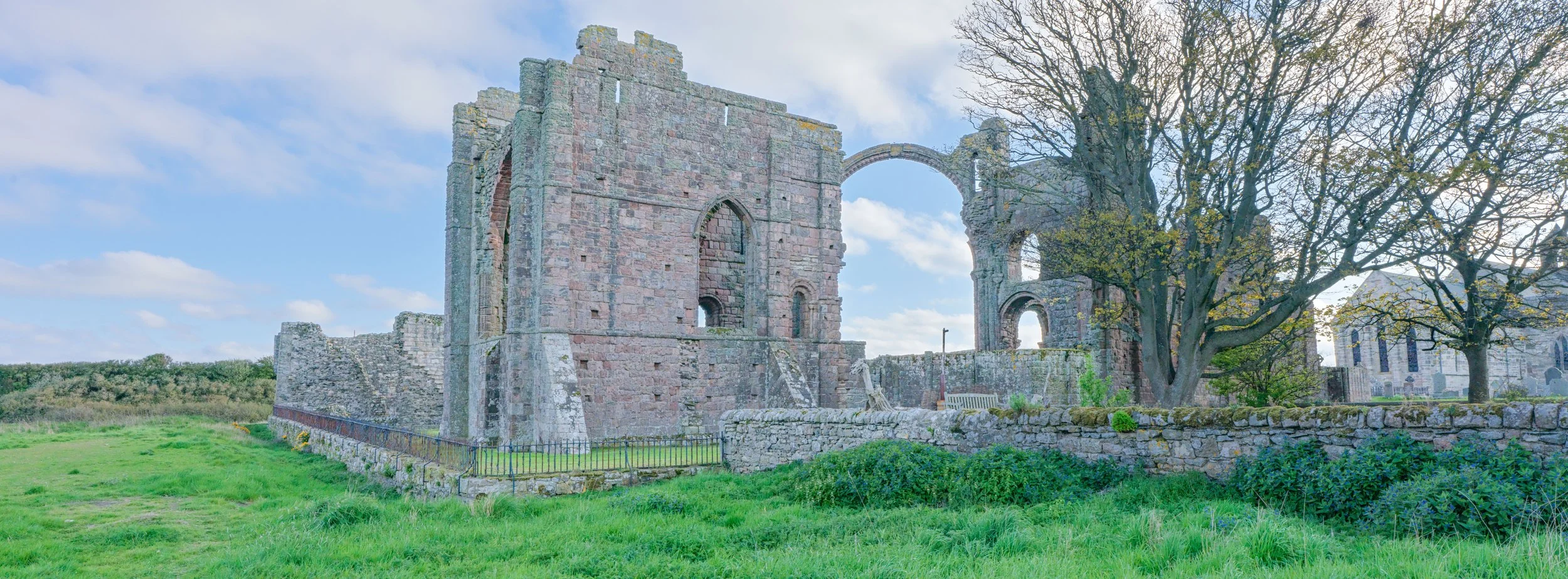
Ruins of the Priory on Holy Island
By now the island had emptied. Most visitors had retreated to their evening meals, leaving Holy Island in that rare state of calm that only exists between tides and dinner reservations. I found myself strolling from behind The Crown & Anchor - which was open, warm, and extremely tempting - towards the War Memorial, where the coastal path leads east towards the castle.
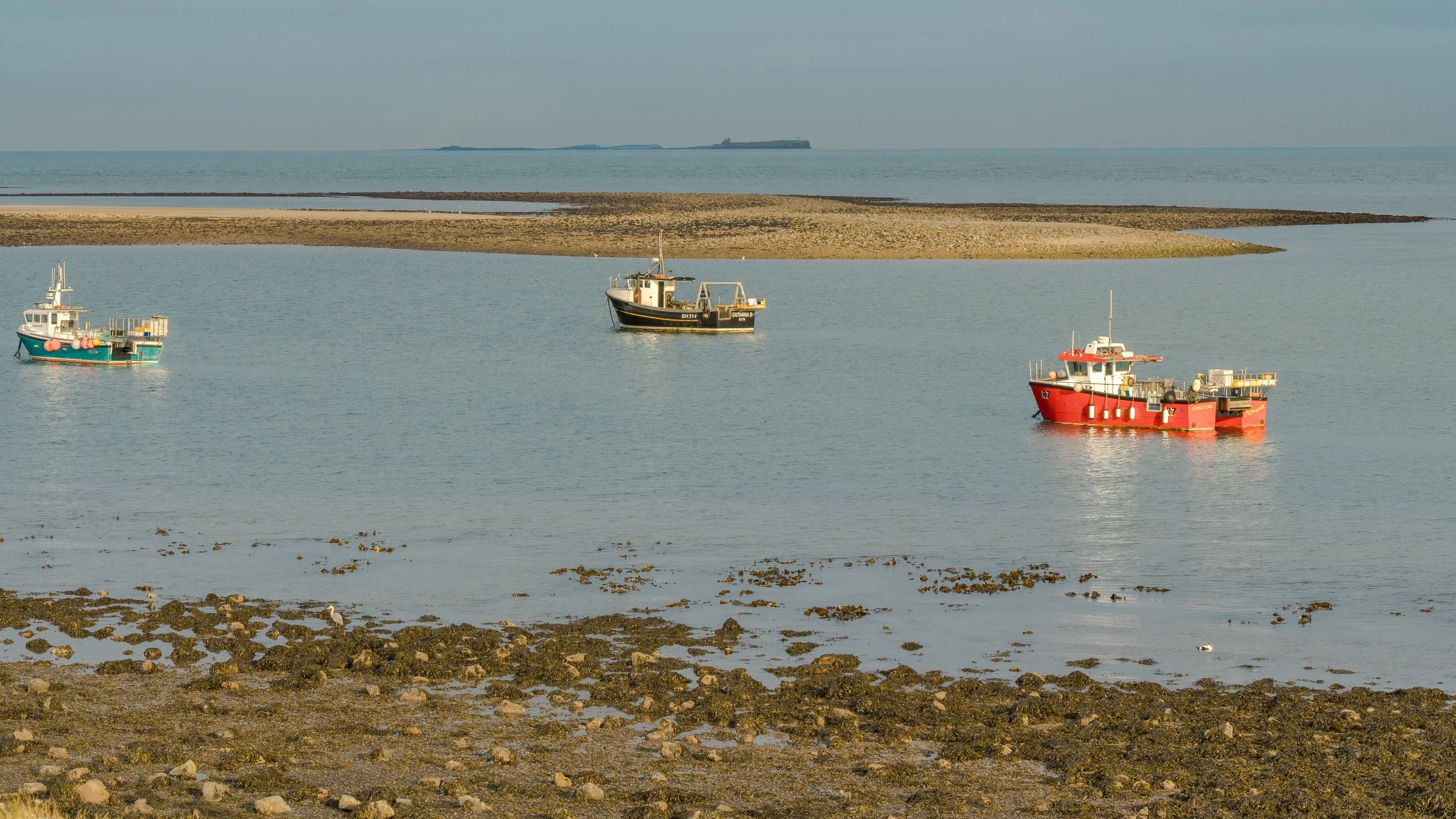
On the way, I took several handheld shots of the priory’s remaining walls and across The Ouse, the tidal inlet that has served as Holy Island’s modest harbour for centuries. It’s never been a bustling port, but it has long supported the island’s fishing tradition - herring, salmon, and shellfish once formed the backbone of local trade. Even today, small boats still moor there, bobbing quietly between tides as if waiting for the next chapter of island history to unfold.
I didn’t get as far as Steele End or Osborne’s Fort. Instead, I settled on a rise about 100 metres back - just enough elevation to let my telephoto lens capture both the castle and the fort in the mid‑ground.
And yes, this spot is part of The Heugh, the rocky ridge that runs along the southern edge of the village. It’s the same ridge that holds the remains of Osborne’s Fort, built in 1671 during Anglo‑Dutch tensions. The fort once formed a defensive partnership with Lindisfarne Castle, creating a crossfire over the harbour. Today only the Redoubt survives - a thick‑walled stone block that most visitors (including me) mistake for “some old ruin”, but which is actually a rare surviving example of Charles II‑era coastal defence.
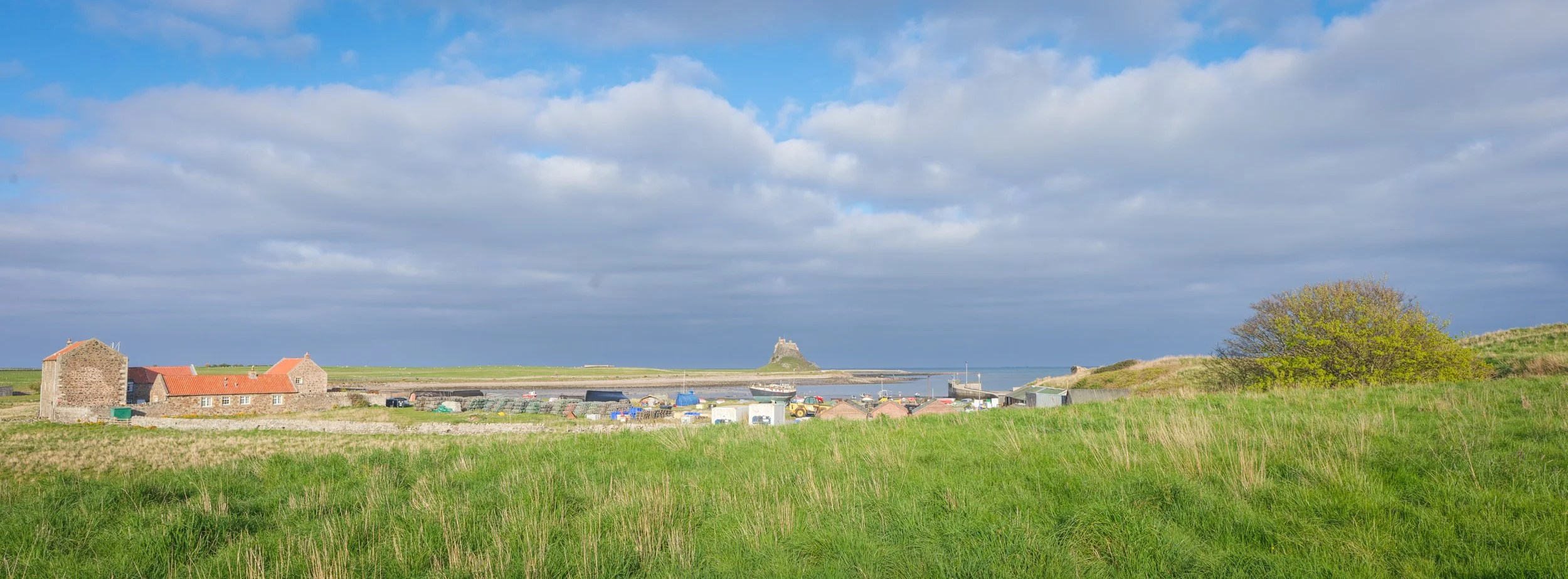
The Ouse
Setting up – the tripod, the lens, and the cloud that ruined everything
I set up my tripod with the confidence of someone who believed the sun was about to deliver a cinematic burst of golden light across Lindisfarne Castle. Naturally, the universe disagreed. The moment - the exact moment - I locked the ballhead and framed the shot, an enormous cloud rolled in from the west and flattened the entire scene into a dull, lifeless shade. The castle went from a majestic silhouette glowing in warm evening sun, to grey lump on a grey hill under a grey sky.
So I waited.
And waited.
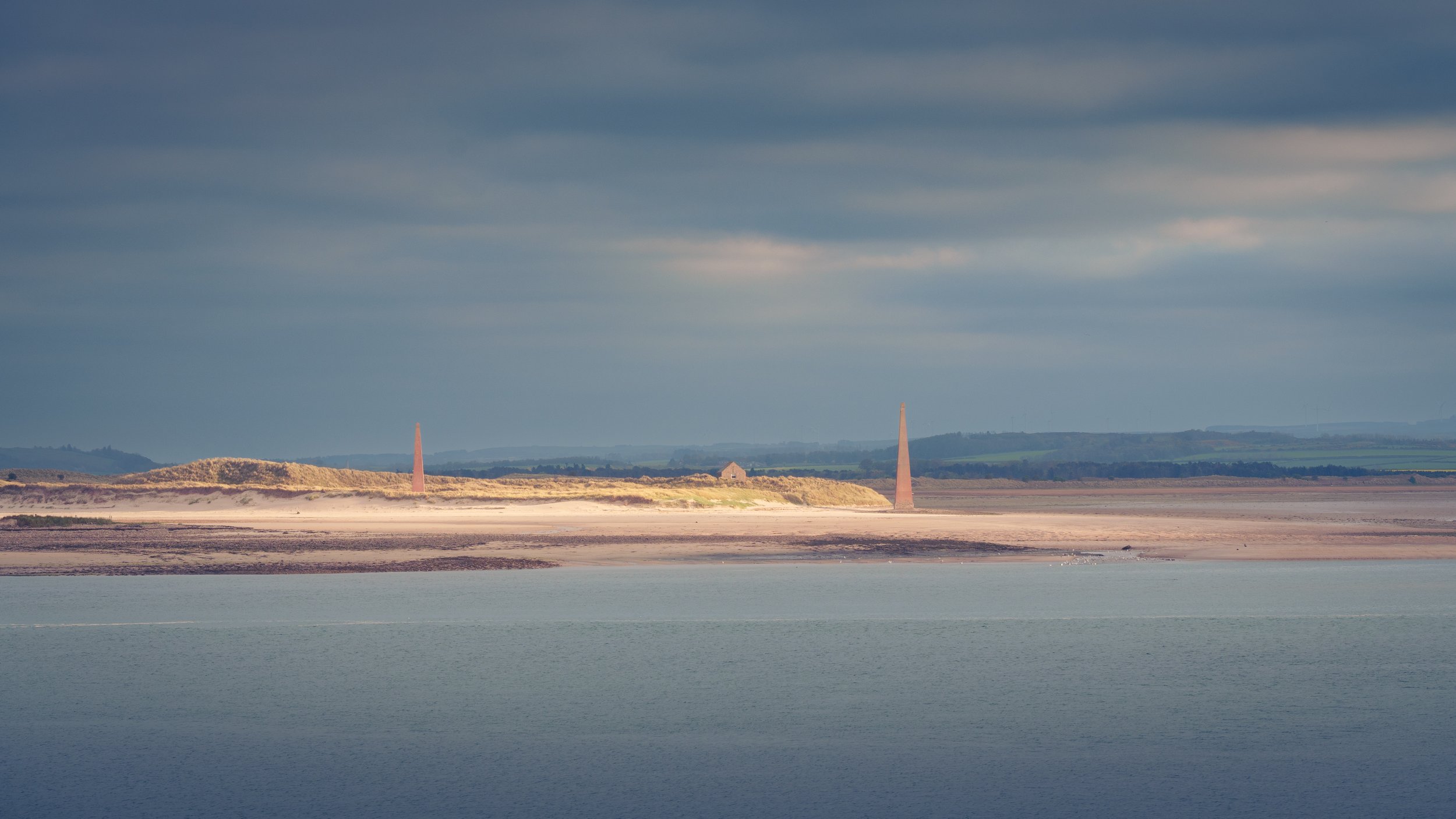
Eventually, I noticed something happening to my south: the Needles of Guile Point - those elegant red‑brick lantern towers built in the 19th century to guide ships into the harbour, suddenly lit up as the sun broke through and hit the sandbanks. They looked magnificent, glowing like two Victorian beacons pointing the way home.
I had to make the buttock clentching decision that so many photographers before me have dad to face - do I recompose? If the castle wasn’t going to cooperate, perhaps the Needles would. But there is always a danger, akin to choosing red over black in a game of roulette - and the sun had the upper hand (apologies for the mixed metaphors there!).
I swung the tripod around, adjusted the lens, framed the shot…
…and immediately watched the Needles fall into shade. Bum.
The sun was shining somewhere - I could see it lighting up fields to the west. But now neither the castle nor the Needles had any light worth photographing. The temperature dropped. My enthusiasm followed. Double bum.
The couple from Sheffield – who deserved better
At that moment, an unsuspecting couple in their late 50s or early 60s approached. Well that would be stretching reality a little; they were simply heading back along the path that I had decided to set camp on, with my gear strewn across their way - including a video camera that was stilll rolling. The man was a tall, thin chap and the lady was of a petite frame, both wrapped in proper warm clothing, woolly hats, and mitts. They looked like sensible people who had dressed for the North Sea breeze. I, meanwhile, looked like someone who had dressed for optimism; still, my fingers now matched the deep blue of my puffer jacket, so I was fully colour co-ordinated.
I looked up, saw the two walking towards me and instantly addressed them “It’s a cold job waiting for the sun”.
And with the trap laid, I then inexplicably felt the need to explain my purpose. I began educating them on landscape photography, the need for sun on the castle, the grey clowds framing it etc - all the while my tripod stood there like a monument to misplaced confidence.
The poor lady made the mistake of asking about the Needles. This triggered an unsolicited lecture - the kind of lecture only a man who had done a quick Google search while shivering could deliver. I explained what I knew: that the lantern towers were built to guide ships into the harbour, that they line up with the castle to form a navigational transit, and that they were currently refusing to cooperate with my artistic vision.
She nodded politely, the way one nods when trapped in a conversation they didn’t ask for.
Then came the moment of mild personal tragedy. The man asked if I was photographing birds. I told him I was doing landscape photography. He barely hid his disappointment. I don’t know what bird he hoped I was photographing, but clearly it wasn’t a castle.
Fortunately for them, the sun suddenly burst through the clouds and lit up Lindisfarne Castle in glorious warm light. I made my excuses - urgently - and turned back to my camera. I couldn’t help noticing how quickly they escaped, practically sprinting away as I fiddled with ballhead adjustments and camera settings.
Then came the frantic clicking. Then came the triumphant “YESSSSS!” Then came the gulls, startled by my enthusiasm. With the castle finally captured, I turned my attention back to the Needles and grabbed a few more shots before the light vanished again.
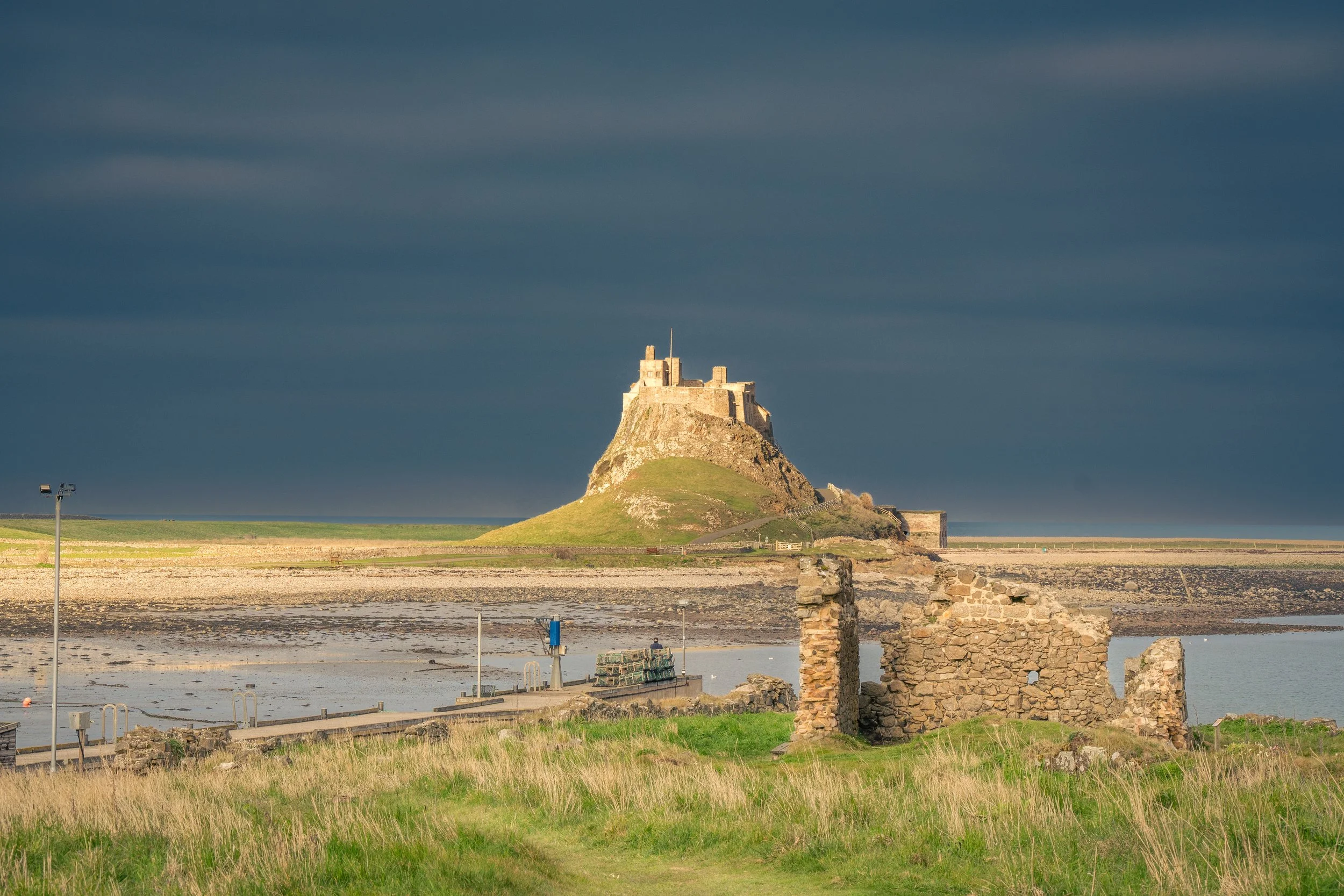
Lindisfarne Castle, with Osborn’s Fort in the foreground
Heading back – the walk, the quiet, and the temptation of the pub
After packing up, I strolled back towards the village. I didn’t meet a soul. The island had settled into that peaceful, end‑of‑day quiet that makes Holy Island feel almost timeless.
I did poke my head into The Crown & Anchor, but the dining area was full, and the tap room - though technically available - had a posse of bar‑flies who looked like they would watch me eat every mouthful. I decided to head home instead.
What comes next
This concludes Part 2 of my Holy Island visit. In my next piece - soon to be published - I take the Sheffield chap’s hint and attempt some wildlife photography on a trip to the Farne Islands. Puffins, terns, guillemots, and perhaps even a seal or two.
And yes, I will try not to lecture any passing strangers this time. Meanwhile, below is a link to the behind the scenes video of Part 2.