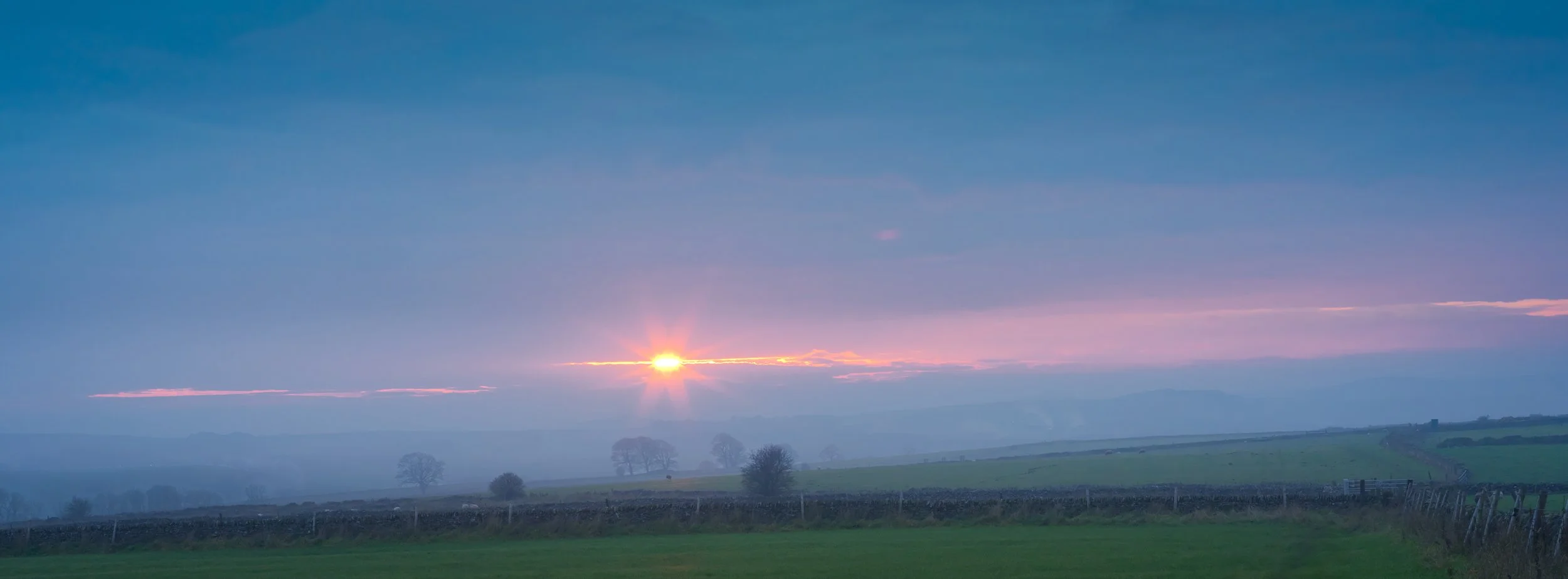
Sunset on a misty evening, viewed through the slightest of cracks in the heavy bank of clouds
For someone who claims to be a landscape photographer, I recently realised that I hadn't taken a photograph with my main camera for over two months.
The admission feels slightly embarrassing. Not because I had stopped taking an interest in photography, but because I had quietly allowed life to fill every available space around it. Work commitments, chores, routines and all the other small obligations that seem to arrive daily had gradually pushed photography further and further into the background.
The odd thing is that I never stopped walking. Living in the Peak District makes that almost impossible. Step outside my front door and there are footpaths, fields and limestone dales waiting to be explored. The walks continued, but the camera bag stayed at home. The tripod stayed in the cupboard. The Hasselblad sat patiently on a shelf, waiting for its next outing.
Then, almost on a whim, I decided enough was enough. The camera came with me.
My destination was High Dale, one of the many beautiful and understated corners of the White Peak. The weather was uninspiring. Cloud covered most of the sky and the light was flat, grey and unwilling to do anything dramatic. The sort of conditions that cause landscape photographers to check the forecast repeatedly while convincing themselves that staying at home is the sensible option.
But this trip was never really about dramatic light. It was about getting back out there. Words that bring a lump to my throat, perhaps in the realisation that I had foresaken one of the pastimes that truly gave me purpose and calm.
The route led across a succession of sheep-filled fields. Fields which, judging by the evidence underfoot, had been occupied by approximately a million sheep. Every step required careful negotiation around countless woolly residents and the endless collection of "love parcels" they had thoughtfully distributed throughout the countryside.
Despite the damp grass and less-than-glamorous footing, it felt good to be out carrying a camera again.
High Dale unfolded ahead in layers of limestone walls, rolling pasture and scattered trees. The colours of autumn had largely faded, yet there was still beauty in the muted landscape. The dry-stone walls created their familiar patterns across the hillsides while isolated trees stood as silent sentinels overlooking the valleys below.
I found a composition centred around two lone trees standing proudly above the dale; serving as gateways to the valley beyond. They were not strangers - I had been here before, three months earlier on abalmy evening with the sunset illuminating the environment and backlighting the two trees. It had been a delightful composition, even though it had caused me to miss the first half of an England match in the World Cup of all things!
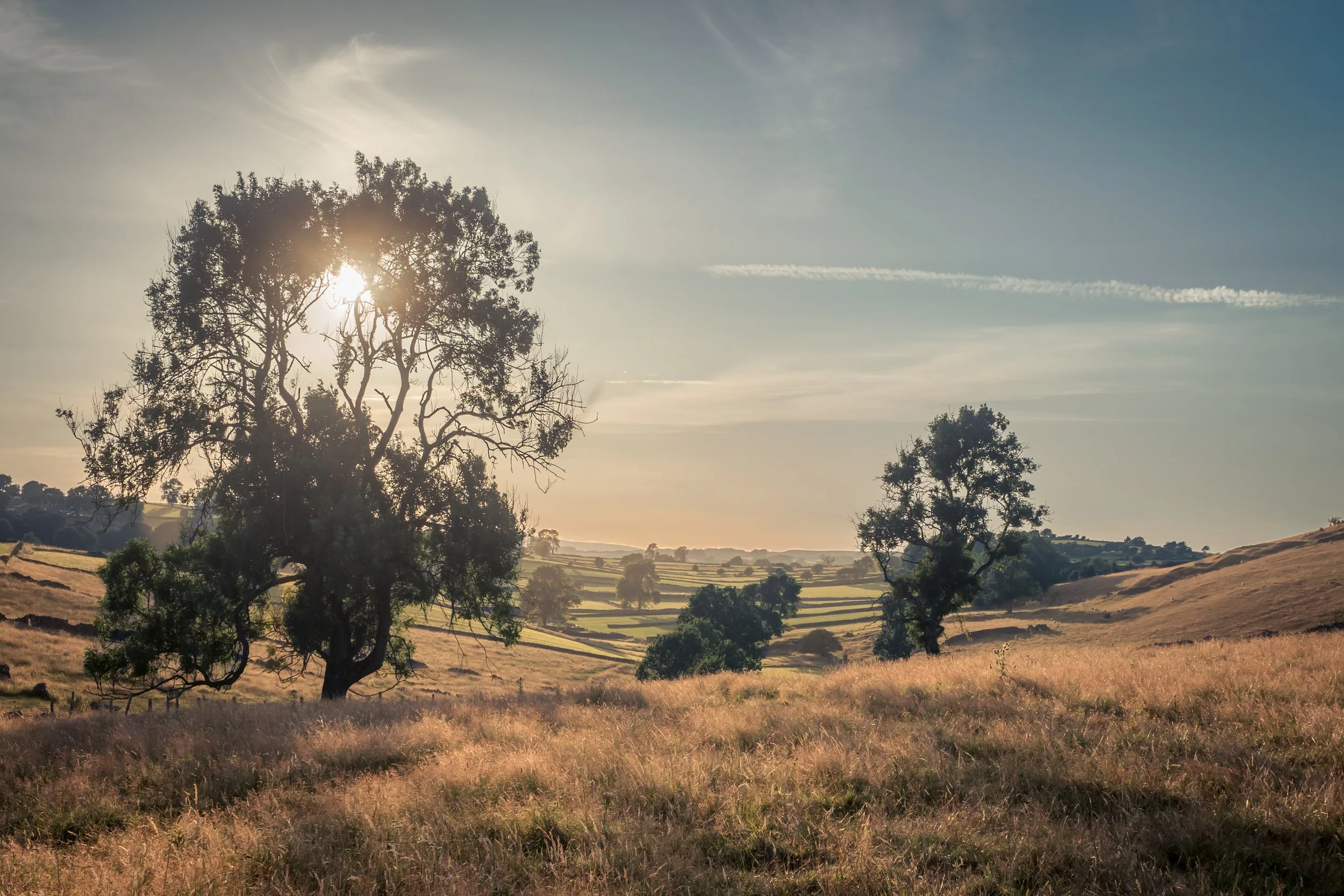
The scene in warmer times. July 2026
By contrast, today the light wasn’t spectacular. The two trees still stood proud, but bare of their canopies. In truth, it was a rather ordinary scene. Yet it didn’t matter.
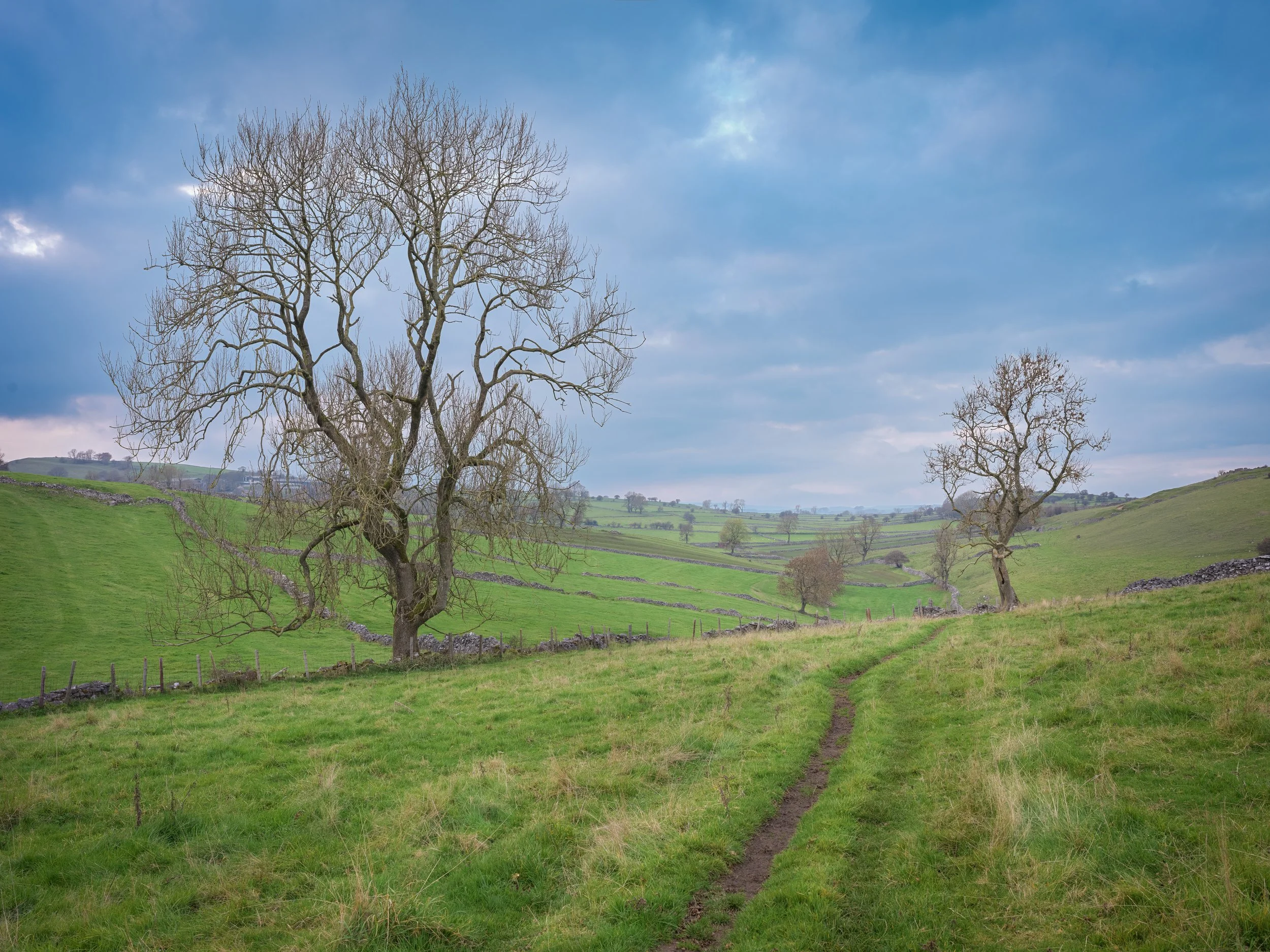
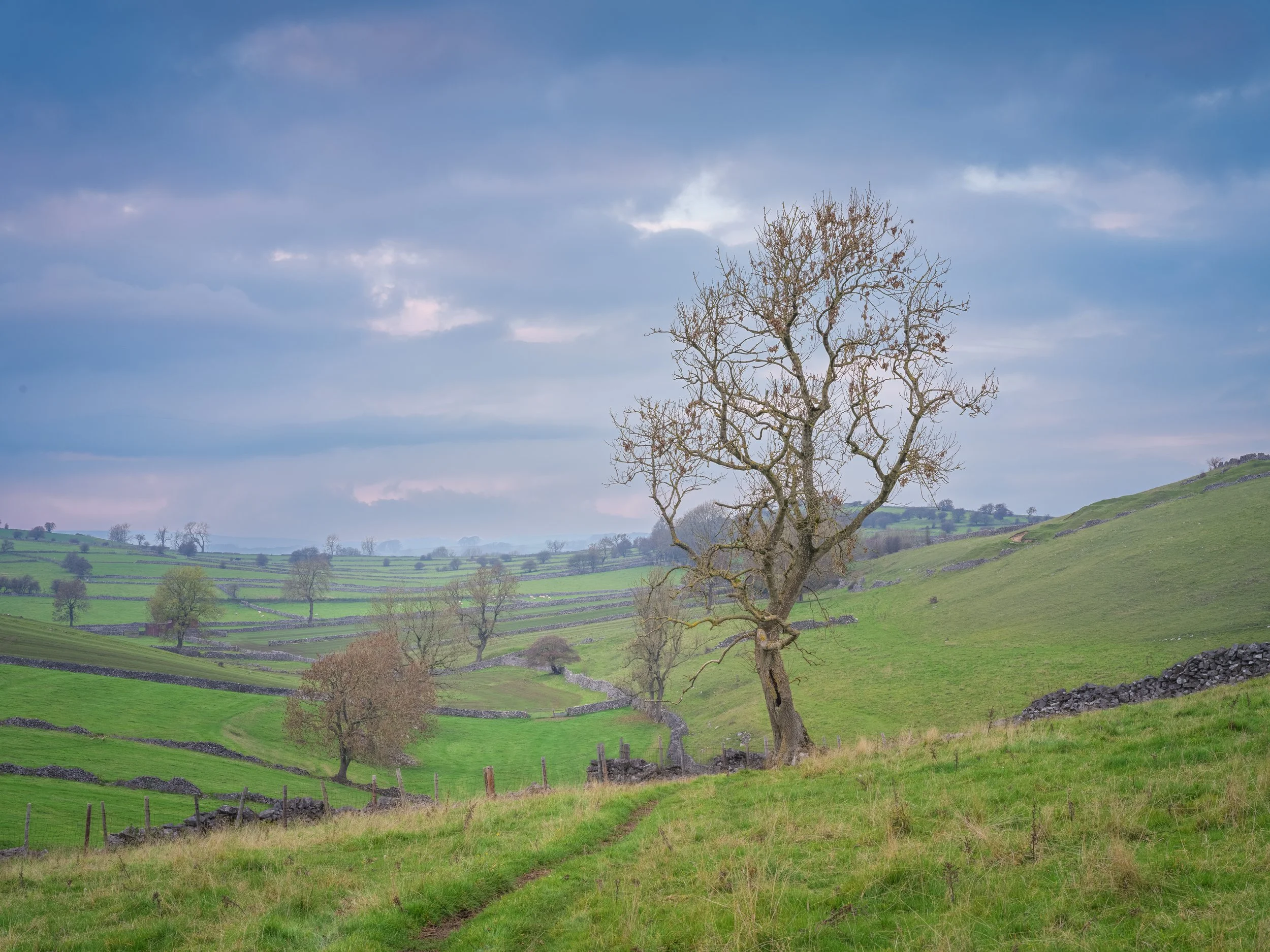
The simple act of setting up a tripod, considering a composition and pressing the shutter felt oddly satisfying.
Further along, mist began building in the valley. The landscape gradually softened as distant hills became increasingly subdued. Colours drained away and detail disappeared into layers of pale blue-grey atmosphere. Looking across the valley, the scene felt less like a traditional landscape photograph and more like a study in mood and subtlety.
I took a few more images. None of them were destined to become portfolio pieces. All of them mattered.
As sunset approached, I began to realise something important. While there remained a small possibility that the sun might break through the cloud later in the evening, my position deep within the dale left me with a problem. By the time sunset arrived, the sun would already have slipped behind the higher ground south of the village.
Watch the behind the scenes video - part 1
The opportunity, if it came, would arrive somewhere else. The following afternoon I decided to investigate.
This time I left directly from my front door, but headed in the opposite direction. If I couldn't beat the conditions, perhaps I should join them.
The weather remained cool and cloudy, although occasional gaps in the cloud revealed patches of encouraging blue sky. Rather than dropping into the dales, I climbed steadily along a farm track, crossed a stile and began gaining height.
Mist was already forming. Looking west, the view became increasingly ethereal. The middle distance faded into layers of haze while the far horizon seemed to dissolve completely. Successive ridges emerged as increasingly pale silhouettes, stacked one behind another in desaturated bands of grey-blue.
I paused to take several handheld photographs before continuing my climb.
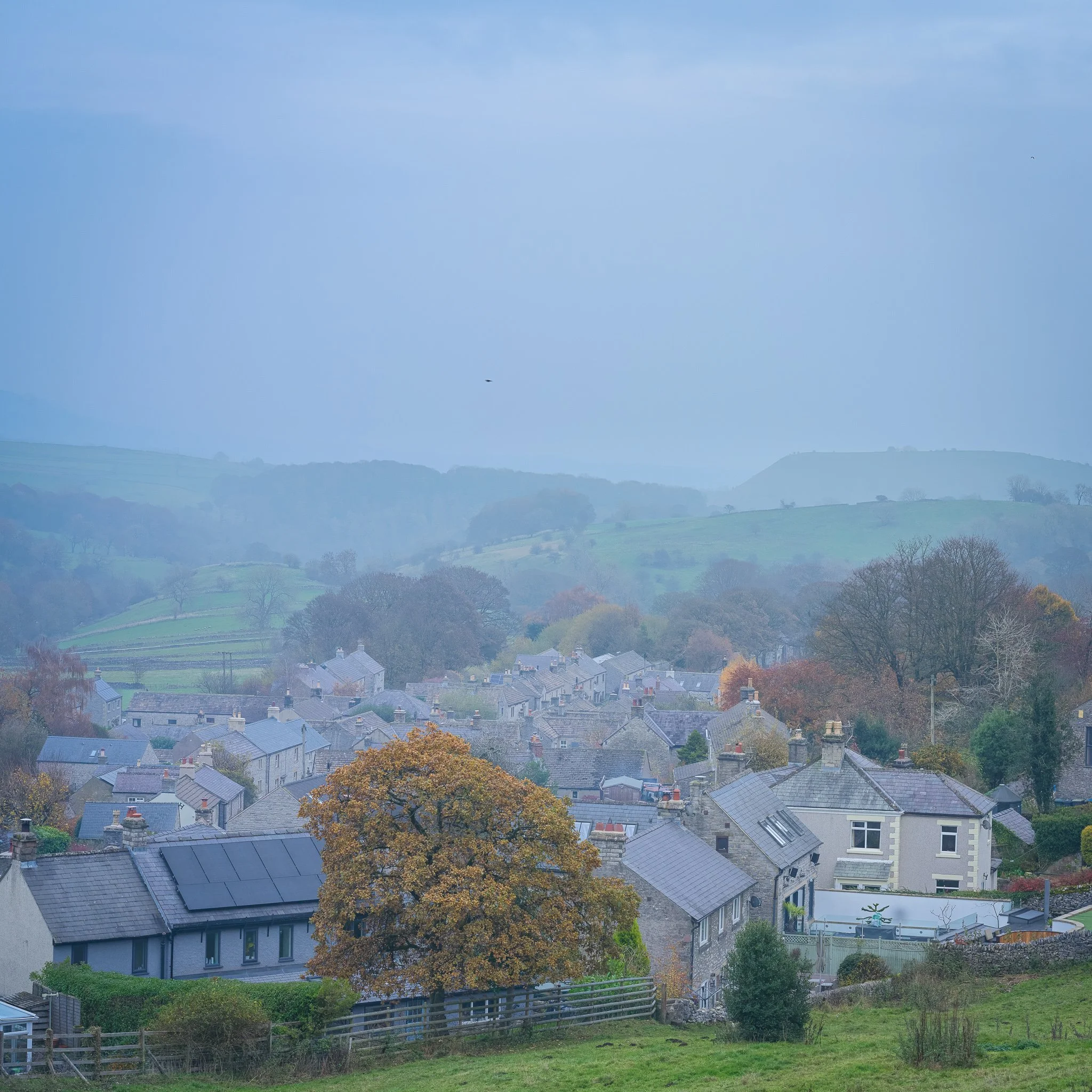
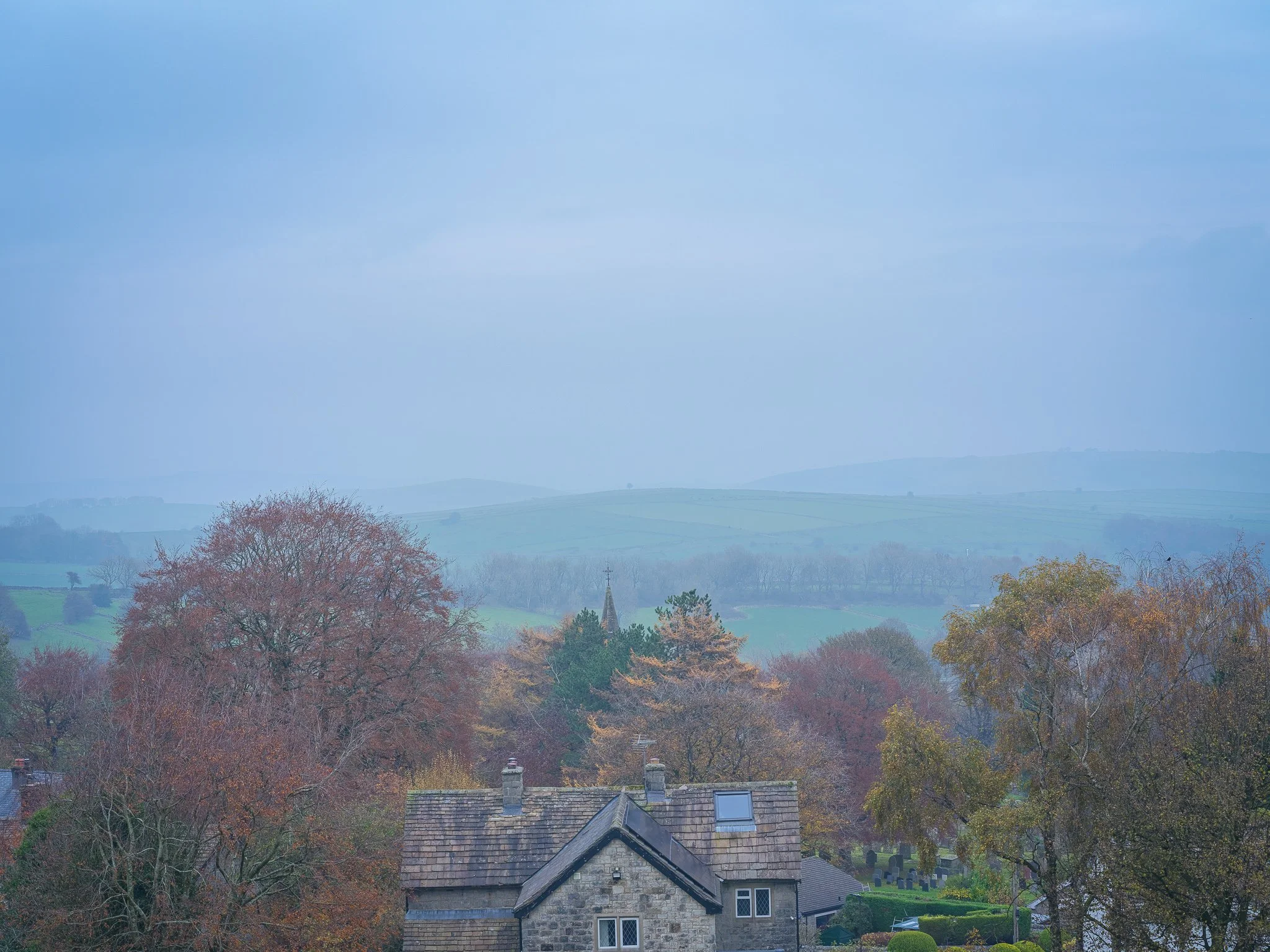
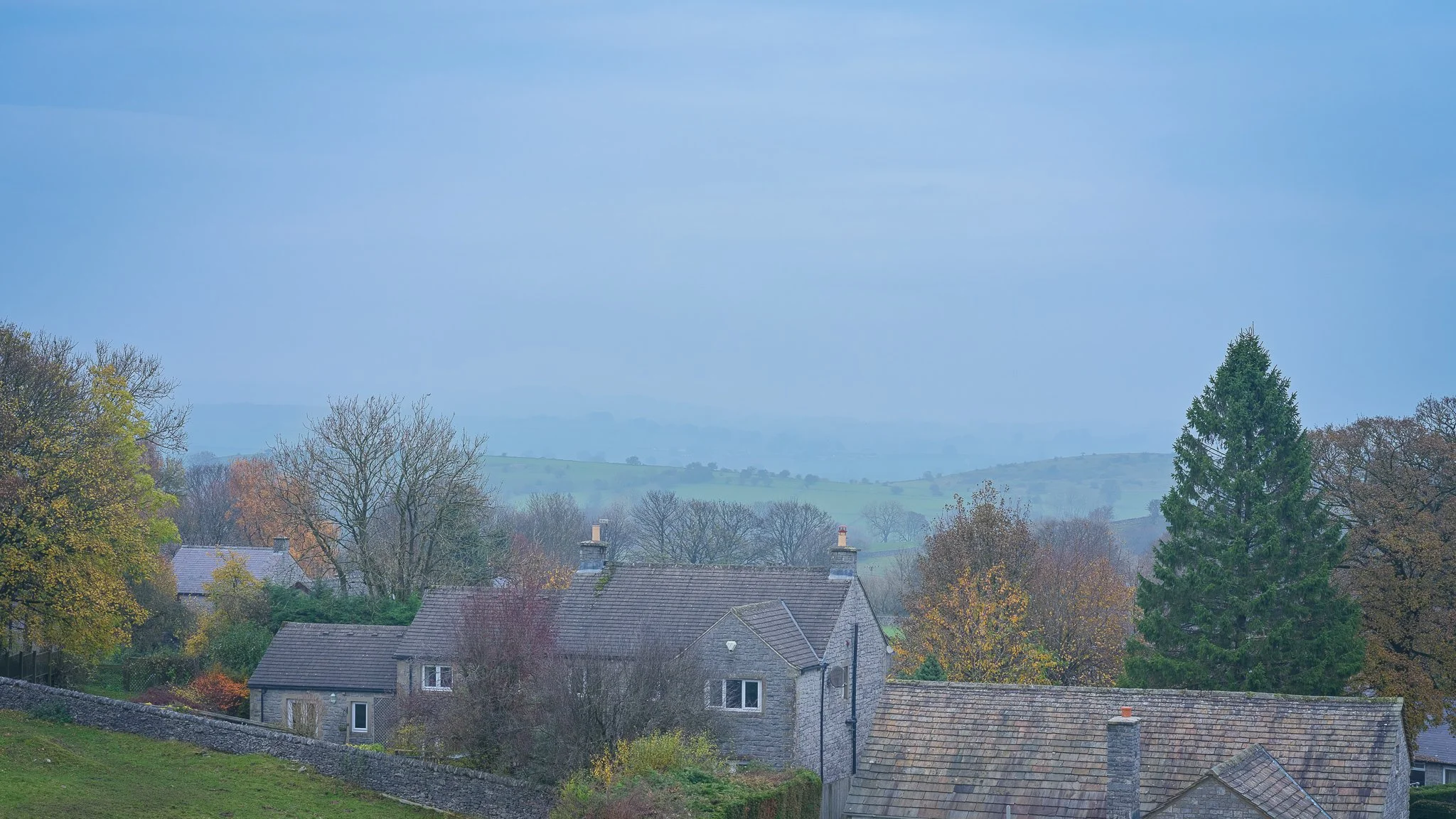
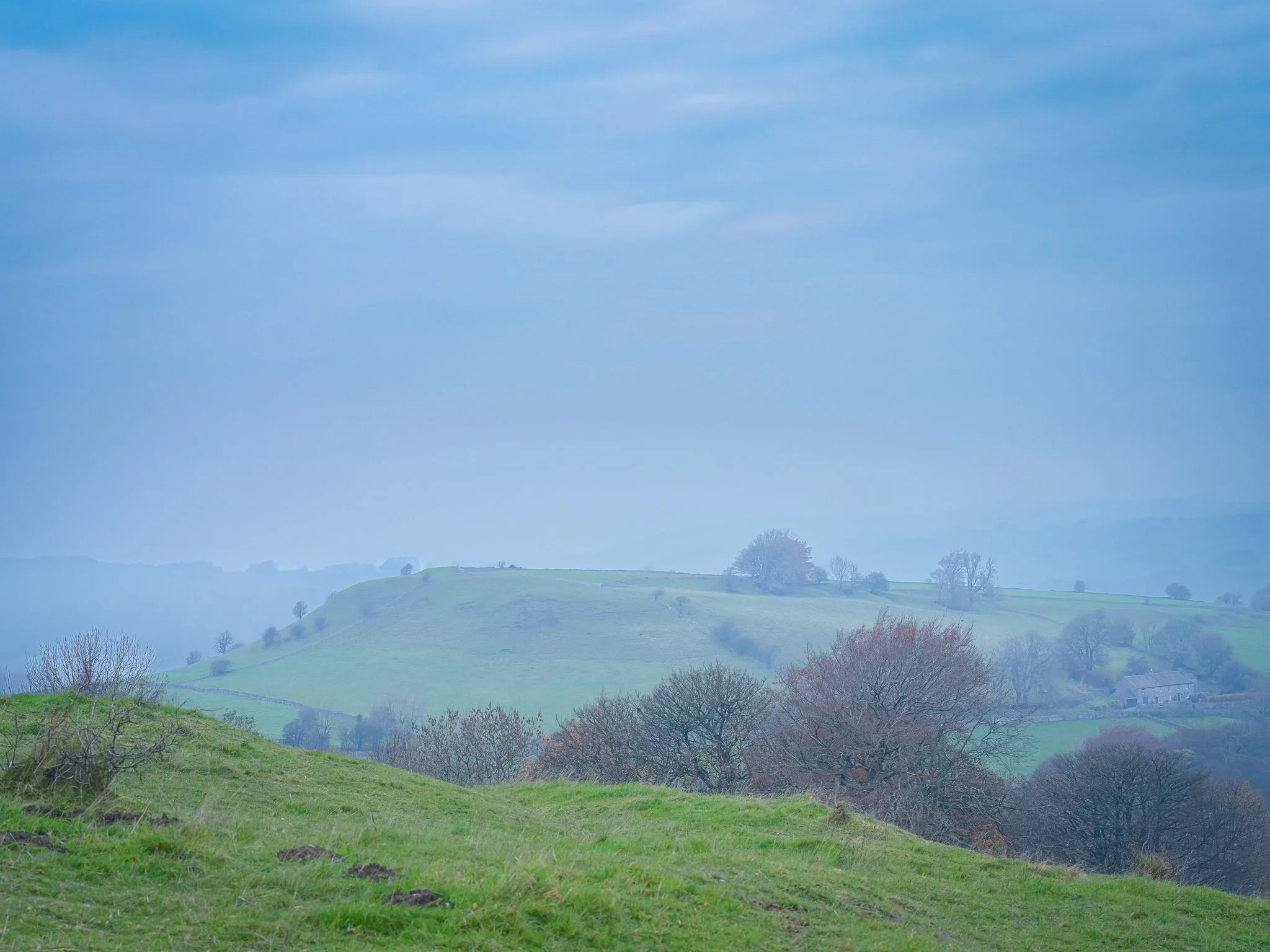
Eventually I reached Sough Top. The familiar landmarks appeared: the underground reservoir and the mobile telephone mast sitting high on the hill. From there I continued westward, searching for a viewpoint that might offer an unobstructed view towards Cheshire and whatever sunset might develop.
Crossing field boundaries became something of an adventure in itself. Some of the stone steps built into the walls looked as though they had been designed by Professor Yaffle from Bagpuss. Narrow, steep and faintly ridiculous, they seemed more suited to animated woodland creatures than photographers carrying camera bags and tripods. Still, they did the job.
The light remained stubbornly flat and I wasn't feeling particularly optimistic.
Soon I arrived at Five Wells. This ancient spring once provided a vital source of water for local communities stretching back to Saxon times. Today it sits quietly amongst the fields, largely unnoticed by those hurrying elsewhere. I stopped for a while.
The mist continued building. The distant valleys faded further into obscurity, while occasional glimpses between breaks in the cloud hinted at better conditions somewhere beyond the horizon.
In the far distance stood a solitary farm. Across the stillness came the unmistakable sound of donkeys. It was one of those wonderfully unexpected countryside moments. Nothing remarkable or dramatic. Yet somehow memorable.
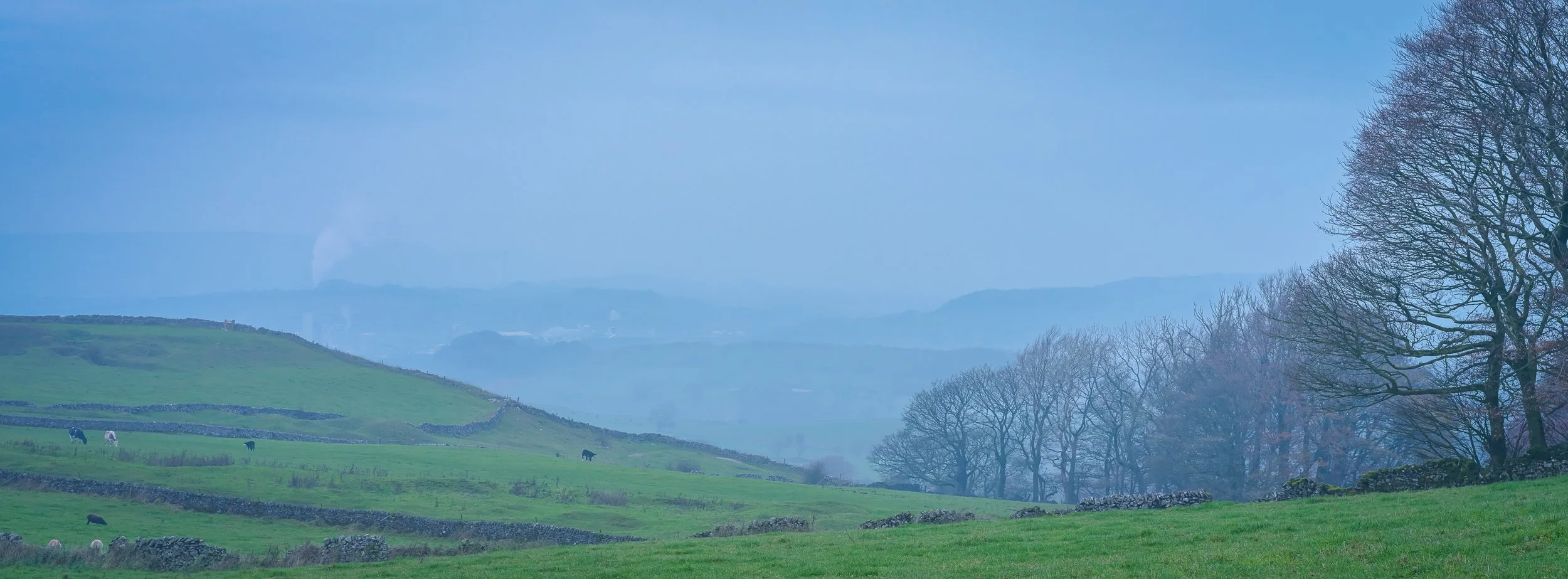
View from Five Wells
Pressing onwards, I eventually found the viewpoint I had been searching for. For the first time that evening, the entire western horizon opened before me. The sky remained dominated by grey-blue cloud, but just above the horizon there appeared a thin strip of amber light. It looked like a crack in a closed door, with sunlight escaping through the smallest of openings.
I climbed carefully onto the top of a nearby stone wall and balanced there with camera in hand. The position was far from elegant but it provided a better angle towards the horizon. I took several photographs before climbing back down and starting a piece to camera for the video I was recording.
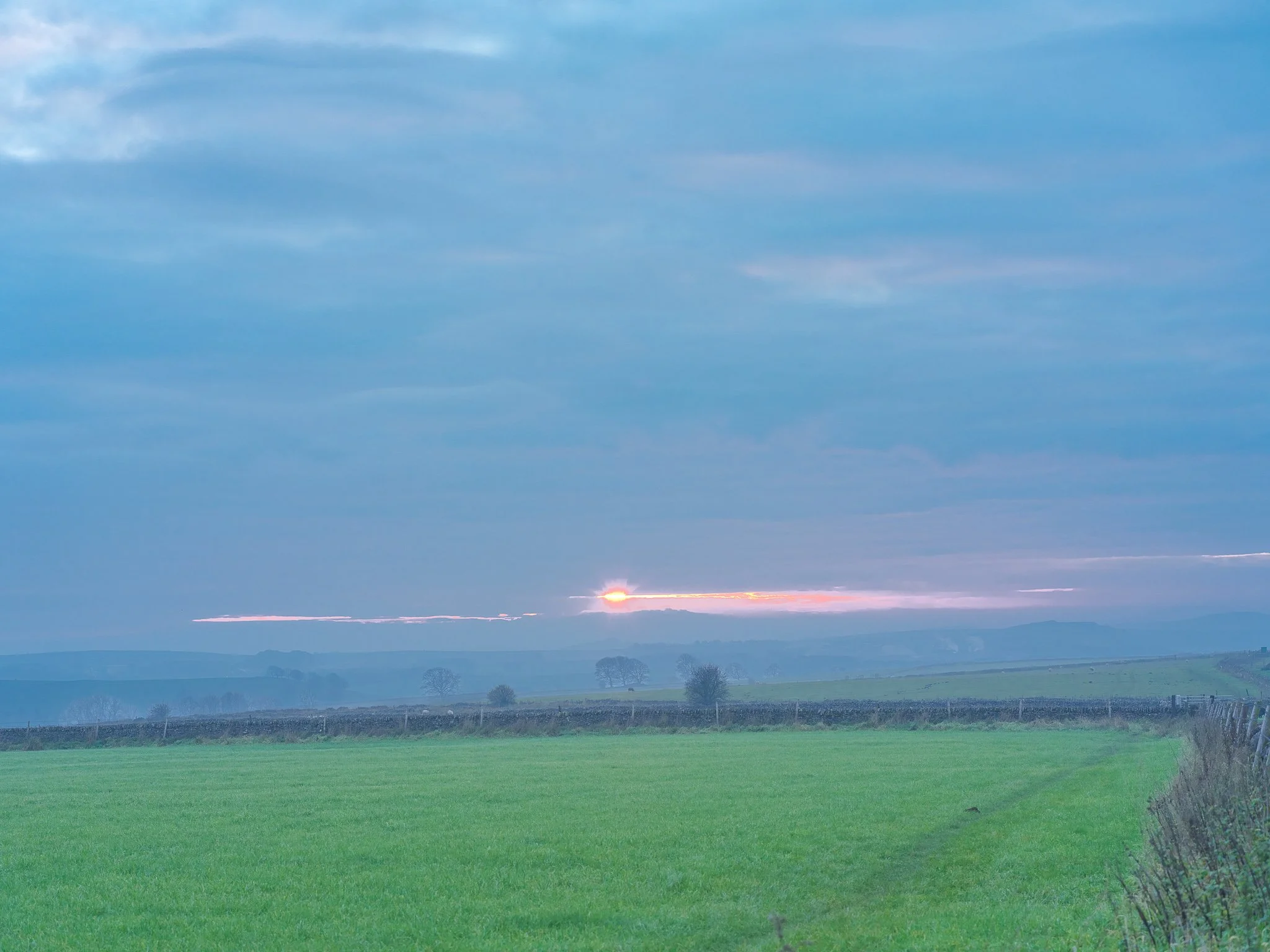
Satisfied that the day's photography was largely over, I began wrapping up my thoughts. Then everything changed.
Almost instantly the sun appeared through the gap. The landscape transformed.
The small crack of light became a brilliant window through the cloud, sending warm illumination across the western sky. Years of landscape photography have taught me that moments like this rarely last long. The sun would soon disappear again behind the cloud bank.
There was no time for hesitation. The camera came up. The shutter began firing.
Then another thought struck me. With the sun partially hidden behind the clouds, there was an opportunity for a sunstar. I quickly abandoned my existing settings and stopped down the lens from f/8 to around f/16. The explanation for the camera would have to wait. Right now there was only enough time to work.
Click. Click. Click.
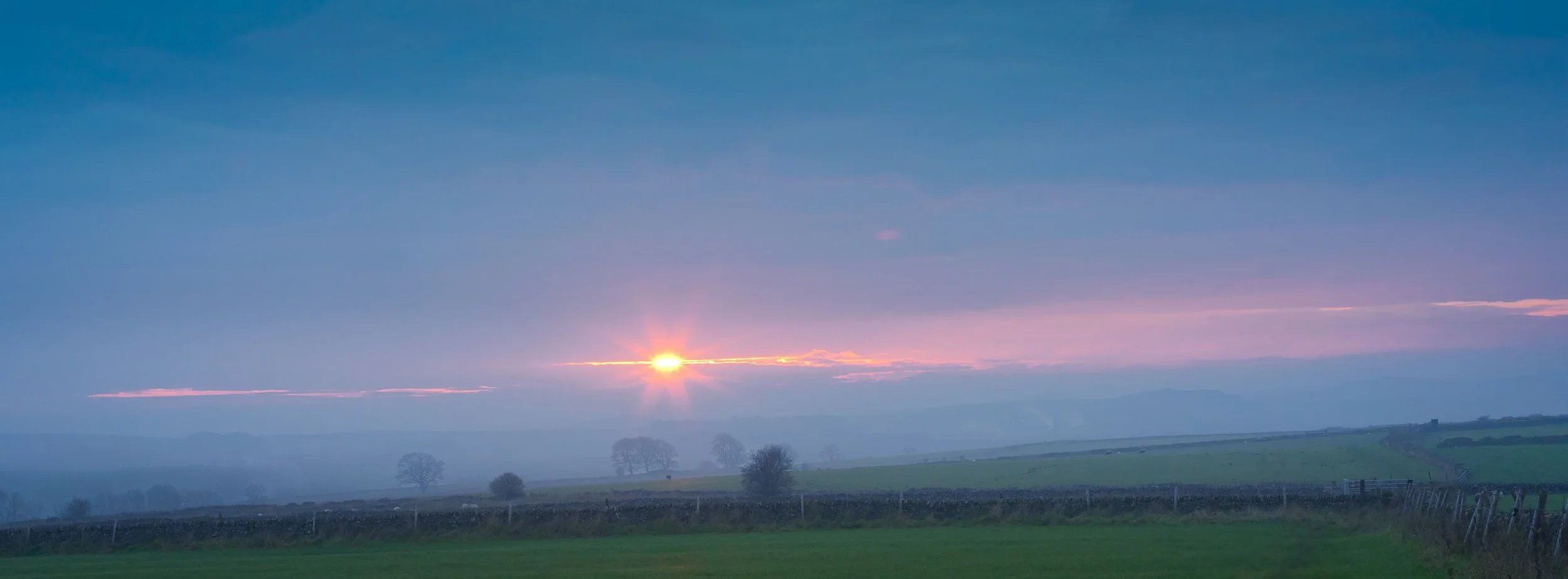
The Hasselblad XCD 90mm f/3.2 responded with its distinctive mechanical clatter. Not so much the sound of a premium modern lens as an ageing piece of agricultural machinery reluctantly waking from hibernation.
And then, as quickly as it had arrived, the moment passed. The clouds closed. The light faded. Calmness returned.
Standing there in the evening stillness, I felt a quiet sense of satisfaction. Not pride or achievement worthy of boasting about. Simply satisfaction.
For two days I had done something I hadn't done for months. I'd left the house not merely to go for a walk, but to make photographs. I'd carried a camera bag. I'd used a tripod. I'd stood patiently waiting for light. I'd rediscovered the process that had first drawn me into landscape photography.
The images won't win awards. They weren't taken under exceptional light. They won't appear on gallery walls.
But that's not their purpose. Those photographs now stand as evidence of something more important. They mark my return to photography. And after two months away, that feels like reason enough to press the shutter.